
Table of Contents
Table of Contents
- A Brief History of the Sega Master System
- Top Games You Probably Missed
- Unique Features and Hardware
- Collecting and Modding Today
- How to Emulate the Master System
In the annals of retro gaming history, few consoles have been as criminally overlooked as the Sega Master System. While the Nintendo Entertainment System dominated headlines and living rooms across North America, Sega’s 8-bit powerhouse was quietly building a remarkable library of games and establishing itself as a worthy competitor. This retro console underrated by mainstream gaming culture deserves recognition for its technical innovations, exceptional game library, and lasting influence on the industry.
The Sega Master System represents a fascinating chapter in gaming history—one where superior hardware, innovative accessories, and memorable SMS games couldn’t quite overcome Nintendo’s marketing dominance and third-party developer exclusivity deals. Yet for those who experienced its magic firsthand, the Master System remains a beloved piece of retro gaming history that continues to attract new fans decades after its release.

The Sega Master System Mark II with its distinctive controller design
A Brief History of the Sega Master System
The Sega Master System’s journey began in 1985 when Sega released the SG-1000 Mark III in Japan. This console would later be redesigned and rebranded as the Master System for Western markets in 1986. Unlike many gaming systems of its era, the Master System was born from Sega’s extensive arcade experience, bringing cutting-edge technology from the arcade floor to home consoles.
Origins and Development
Sega’s entry into the home console market wasn’t accidental. The company had already established itself as a major arcade manufacturer, creating iconic games like Hang-On and Space Harrier. This arcade expertise would prove invaluable when developing the Master System’s hardware and game library.
The transition from the SG-1000 Mark III to the Master System involved significant hardware improvements and a complete visual redesign. Sega understood that competing with Nintendo would require more than just superior specs—it needed a system that looked and felt premium.
1986
North American Launch
13 Million
Units Sold Worldwide
300+
Games Released
8 Years
Active Production Period
Market Competition and Challenges
The Master System faced an uphill battle from day one. Nintendo had secured exclusive licensing agreements with many major third-party developers, effectively limiting the software available for Sega’s system. This created a challenging environment where technical superiority wasn’t enough to guarantee success.
Despite these obstacles, the Master System found success in international markets, particularly in Europe, South America, and Australia. In Brazil, the system became so popular that it continued to receive new games well into the 1990s, long after production had ceased in other regions.
| Region | Launch Year | Market Performance | Notable Success Factors |
|---|---|---|---|
| North America | 1986 | Limited Success | Superior graphics, arcade ports |
| Europe | 1987 | Strong Performance | Marketing partnerships, game variety |
| Brazil | 1989 | Market Leader | Local manufacturing, continued support |
| Australia | 1987 | Competitive | Strong distribution, exclusive games |
Technical Innovation
What truly set the Master System apart was its technical capabilities. The console featured superior graphics processing compared to its primary competitor, with better color reproduction, smoother scrolling, and more detailed sprites. These advantages were immediately apparent to anyone who compared games side-by-side.
The system’s custom Video Display Processor (VDP) was capable of displaying 32 colors simultaneously from a palette of 64, compared to the NES’s 25 colors from a palette of 54. This difference might seem minor today, but it resulted in noticeably more vibrant and detailed visuals.

A complete Master System setup showcasing the console’s sleek design
Legacy and Influence
While the Master System didn’t achieve the commercial success of the NES in North America, its influence on gaming cannot be understated. Many of Sega’s most beloved franchises got their start on the Master System, including Phantasy Star, Wonder Boy, and Alex Kidd.
The console also established Sega’s reputation for pushing technical boundaries and creating innovative gaming experiences. This legacy would carry forward to the Genesis/Mega Drive and beyond, cementing Sega’s position as a major player in the gaming industry.
Top Games You Probably Missed
The Sega Master System’s game library is filled with hidden gems that showcase the console’s capabilities. While many gamers are familiar with popular SMS games like Alex Kidd in Miracle World, the system’s true treasures often flew under the radar due to limited distribution and marketing.

Phantasy Star – One of the Master System’s crown jewels
RPGs and Adventure Games
The Master System hosted some of the most impressive RPGs of the 8-bit era. Phantasy Star, released in 1987, was a technical marvel that rivaled anything available on competing systems. The game featured full-color animated cutscenes, pseudo-3D dungeons, and a compelling science fiction storyline that was years ahead of its time.
What made Phantasy Star particularly remarkable was its production values. The game came with a detailed instruction manual that included maps, character backgrounds, and story elements that enhanced the overall experience. This attention to detail was characteristic of many Master System releases.
| Game Title | Genre | Release Year | Notable Features | Rarity Level |
|---|---|---|---|---|
| Phantasy Star | RPG | 1987 | 3D dungeons, animated cutscenes | Common |
| Wonder Boy III: The Dragon’s Trap | Action-Adventure | 1989 | Transformation mechanics, Metroidvania gameplay | Uncommon |
| Psycho Fox | Platformer | 1989 | Animal companions, multiple paths | Rare |
| Master of Darkness | Action-Platformer | 1992 | Castlevania-style gameplay | Very Rare |
| Light Phaser Bundle Games | Light Gun | 1987-1989 | Innovative shooting mechanics | Common |
Arcade Conversions
Sega’s arcade heritage shone brightest in the Master System’s arcade conversions. Games like Space Harrier, Out Run, and After Burner brought the arcade experience home with remarkable fidelity. These conversions weren’t just quick cash grabs—they were carefully crafted adaptations that maximized the console’s capabilities.
Space Harrier deserves special mention for its technical achievement. The game’s pseudo-3D graphics and smooth scaling effects were unlike anything seen on home consoles at the time. The Master System version captured the essence of the arcade original while making smart compromises for the home hardware.
Hidden Gem Spotlight: Wonder Boy III: The Dragon’s Trap
This Metroidvania-style adventure predated many of the genre’s defining characteristics. Players could transform into different animals, each with unique abilities required to access new areas. The game’s interconnected world design and RPG elements made it a standout title that influenced countless future games.
Platform Exclusives
Several Master System exclusives demonstrated the console’s unique capabilities. Psycho Fox, developed by Vic Tokai, featured innovative gameplay mechanics including animal companions that could be thrown to defeat enemies or reach higher platforms. The game’s multiple difficulty paths and secret areas provided exceptional replay value.
Master of Darkness, released late in the console’s lifecycle, was essentially Sega’s answer to Castlevania. The game featured gothic horror themes, challenging platforming, and atmospheric music that rivaled the best of the NES library. Its limited release makes it one of the most sought-after SMS games today.
- Innovative Gameplay Mechanics: Many SMS games featured unique systems not seen elsewhere
- Superior Graphics: The console’s advanced VDP enabled more detailed and colorful visuals
- Atmospheric Sound: The system’s sound chip produced memorable music and effects
- Varied Genres: From RPGs to light gun games, the library offered something for everyone
- International Exclusives: Different regions received unique games not available elsewhere
Sports and Racing Games
The Master System’s sports games often surpassed their NES counterparts in both graphics and gameplay. World Cup Italia ’90 featured detailed player sprites and fluid animation that made soccer matches feel dynamic and engaging. The game’s tournament mode and team customization options provided depth rarely seen in 8-bit sports games.
Racing games like Out Run and Super Monaco GP showcased the console’s ability to handle fast-paced action with smooth scrolling and detailed backgrounds. These games captured the thrill of arcade racing while adding home console conveniences like save systems and extended gameplay modes.
Unique Features and Hardware
The Sega Master System wasn’t just another 8-bit console—it was a showcase of innovative hardware features that set it apart from the competition. From its advanced graphics capabilities to its revolutionary accessories, the system demonstrated Sega’s commitment to pushing technological boundaries.
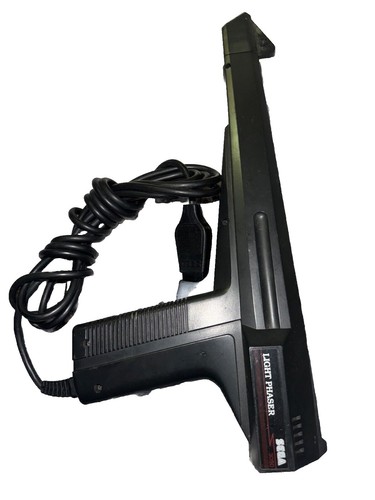
Master System with Light Phaser and 3D Glasses – innovative accessories ahead of their time
Advanced Graphics Processing
The heart of the Master System’s visual superiority lay in its custom Video Display Processor (VDP), based on the Texas Instruments TMS9918 chip family. This processor provided capabilities that were genuinely advanced for the mid-1980s, enabling visual effects that wouldn’t be matched by competitors until much later.
The VDP’s ability to handle smooth horizontal and vertical scrolling was particularly impressive. While other consoles struggled with screen tearing and choppy movement, Master System games featured fluid motion that enhanced the gaming experience significantly.
| Specification | Master System | NES (Comparison) | Advantage |
|---|---|---|---|
| Colors on Screen | 32 colors | 25 colors | More vibrant visuals |
| Total Color Palette | 64 colors | 54 colors | Greater color variety |
| Screen Resolution | 256×192 | 256×240 | Similar resolution |
| Sprites on Screen | 64 sprites | 64 sprites | Equal capability |
| Sprite Size | 8×8 or 8×16 | 8×8 or 8×16 | Equal capability |
| Background Layers | 1 layer | 1 layer | Equal capability |
Revolutionary Accessories
Perhaps no other console of its generation offered as many innovative accessories as the Master System. These weren’t just gimmicks—they were genuine attempts to expand gaming possibilities and create new types of interactive experiences.
The Light Phaser gun was one of the most successful light gun peripherals of its era. Unlike some competitors’ offerings, the Light Phaser was accurate, responsive, and supported by a solid library of games. Titles like Safari Hunt and Gangster Town demonstrated the potential for engaging light gun gameplay on home consoles.
3D Glasses System
The Master System’s 3D Glasses represented one of the earliest attempts at stereoscopic gaming on home consoles. The system worked by rapidly alternating between left and right eye images while the glasses synchronized to block the appropriate eye, creating a genuine 3D effect.
Games designed for the 3D Glasses weren’t mere tech demos—they were fully-featured experiences that used the 3D effect to enhance gameplay. Space Harrier 3-D and Out Run 3-D provided depth and immersion that was genuinely impressive for the technology available at the time.
Technical Achievement: FM Sound Unit
In Japan, the Master System supported an FM Sound Unit that dramatically improved audio quality. This add-on provided near-arcade quality sound for compatible games, demonstrating Sega’s commitment to premium gaming experiences. The difference in audio quality was so significant that many games included entirely different soundtracks when the FM unit was detected.
Build Quality and Design
The Master System’s physical design reflected Sega’s attention to quality and durability. The console’s solid construction and reliable components meant that many units continue to function perfectly decades after manufacture. The cartridge slot design was particularly robust, with a satisfying click that indicated proper connection.
The controller design, while simple, was ergonomic and responsive. The directional pad provided precise control, and the two-button layout was perfect for the era’s gaming demands. The controller’s cable length was generous, allowing comfortable play from across the room.
- Modular Design: Easy expansion through accessory ports
- Robust Construction: Built to withstand regular use and transport
- Efficient Cooling: Ventilation design prevented overheating issues
- User-Friendly Interface: Simple power and reset switches
- Multiple Output Options: RF and composite video connections
Memory and Storage
The Master System’s approach to game storage was both practical and forward-thinking. While cartridges remained the primary medium, the system also supported the innovative Sega Card format—credit card-sized media that offered a more affordable alternative for smaller games.
Some Master System models included built-in games stored in internal memory, with Alex Kidd in Miracle World being the most common. This feature provided immediate entertainment value and demonstrated the system’s capabilities right out of the box.
| Storage Format | Capacity Range | Advantages | Notable Games |
|---|---|---|---|
| Cartridge | 32KB – 512KB | Durability, fast loading | Phantasy Star, Wonder Boy III |
| Sega Card | 32KB – 128KB | Lower cost, compact size | Hang-On, Safari Hunt |
| Built-in Memory | 128KB typical | Instant availability | Alex Kidd in Miracle World |
Collecting and Modding Today
The retro gaming renaissance has brought renewed attention to the Sega Master System, making it an increasingly popular target for collectors and enthusiasts. The console’s unique position in gaming history, combined with its distinctive library of SMS games, has created a vibrant collecting scene with options for every budget level.
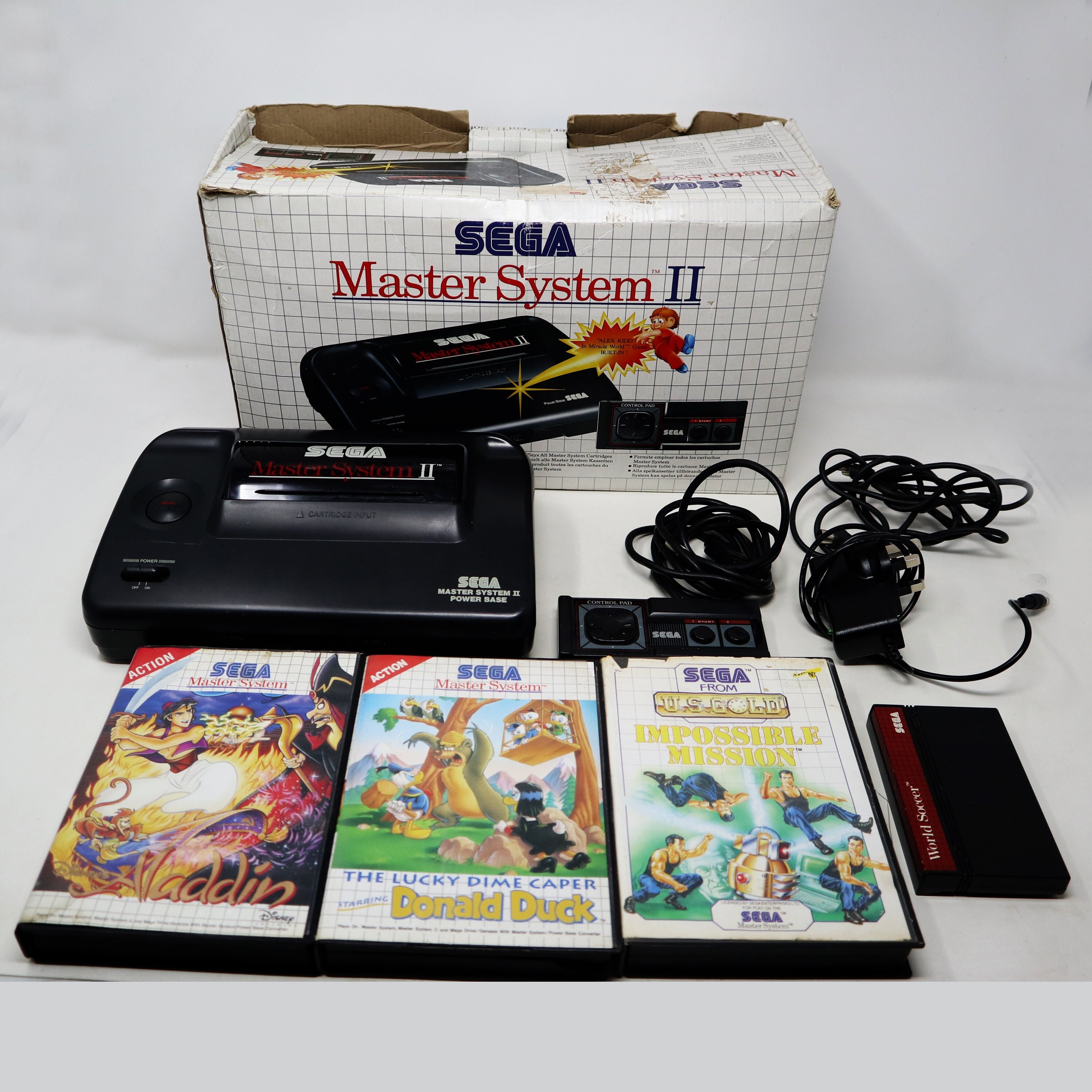
A pristine boxed Master System – the holy grail for collectors
Current Market Values
Master System collecting offers excellent value compared to other retro consoles. While prices have increased in recent years, the system remains accessible to newcomers while offering plenty of room for serious collectors to pursue rare and valuable items.
The console’s varied regional releases create interesting collecting opportunities. European versions often feature different artwork and sometimes exclusive games, while the rare North American releases command premium prices due to their limited distribution.
| Item Category | Condition | Price Range (USD) | Availability | Collector Notes |
|---|---|---|---|---|
| Console Only | Working | $60-120 | Common | Model variations affect value |
| Complete System | Good | $150-300 | Uncommon | Includes all original accessories |
| Boxed System | Complete | $400-800 | Rare | Box condition critical to value |
| Common Games | Cart Only | $5-25 | Very Common | Great entry point for collectors |
| Rare Games | Complete | $100-500+ | Very Rare | Regional exclusives most valuable |
| Accessories | Working | $30-150 | Varies | 3D Glasses most sought-after |
Regional Variations and Rarities
One of the most fascinating aspects of Master System collecting is the significant regional differences in both hardware and software. The Brazilian market, in particular, offers unique collecting opportunities with locally-manufactured games and systems that differ substantially from their international counterparts.
European releases often featured superior packaging design and sometimes included additional accessories or bundle deals not available in other regions. These variations create interesting specialization opportunities for collectors who want to focus on specific regional releases.
300+
Official Game Releases
50+
Brazilian Exclusives
15+
Hardware Variations
6
Major Regional Markets
Modern Modifications and Upgrades
The Master System’s straightforward architecture makes it an excellent platform for hardware modifications. Modern modders have developed numerous upgrades that enhance the original console’s capabilities while maintaining compatibility with original games.
RGB output modifications are among the most popular upgrades, providing significantly improved video quality compared to the original RF or composite outputs. These modifications typically involve installing new components and adding output jacks, but the results are dramatic improvements in image clarity and color accuracy.
Popular Modification Options
- RGB Output Mod: Dramatically improves video quality and color accuracy
- FM Sound Board Installation: Adds enhanced audio capabilities from Japanese model
- Region Modification: Enables playing games from different regions
- 50/60Hz Switch: Allows switching between PAL and NTSC timing
- Reset Button Addition: Adds convenient reset functionality to early models
- Power LED Modifications: Customizes or repairs power indicator lights
Reproduction and Homebrew Scene
The Master System enjoys a healthy homebrew development scene, with new games being released regularly. These modern creations often push the hardware beyond what was achieved during the console’s original commercial run, demonstrating untapped potential in the system’s capabilities.
High-quality reproduction cartridges have made rare games more accessible to players who want to experience them on original hardware. While reproduction carts don’t hold collectible value, they serve an important role in game preservation and accessibility.
Collecting Tips for Beginners
Start with common games to build your library affordably. Focus on complete-in-box items when possible, as loose cartridges are readily available but boxed games appreciate better. Research regional differences before purchasing, as some versions may be more desirable than others. Consider the modding potential when buying consoles, as modified systems can offer significantly better gaming experiences.
Storage and Preservation
Proper storage is crucial for maintaining a Master System collection’s condition and value. The console’s cartridges are generally robust, but the cardboard boxes and instruction manuals require careful handling and storage to prevent deterioration.
Environmental control is particularly important, as humidity and temperature fluctuations can damage both electronic components and packaging materials. Many collectors invest in protective cases and controlled storage solutions to ensure their collections remain in optimal condition.
| Storage Item | Protection Method | Cost | Benefit |
|---|---|---|---|
| Cartridge Protectors | Clear plastic cases | $1-3 each | Prevents label damage |
| Box Protectors | Acid-free plastic sleeves | $3-8 each | Preserves cardboard integrity |
| Console Covers | Dust-resistant fabric | $15-30 | Prevents dust accumulation |
| Climate Control | Dehumidifiers/AC | $100-500 | Prevents environmental damage |
How to Emulate the Master System
For those who want to experience the Master System’s library without investing in original hardware, emulation provides an excellent alternative. Modern emulation technology can reproduce the Master System experience with remarkable accuracy, often with enhancements that surpass the original console’s capabilities.
The Master System’s relatively simple architecture makes it one of the easier retro consoles to emulate accurately. Multiple high-quality emulators are available across different platforms, each offering unique features and advantages for different use cases.
Best Emulation Software
Several emulators stand out for their accuracy, features, and ease of use. Each offers different advantages depending on your platform and preferences, from simple plug-and-play solutions to highly customizable options for advanced users.
RetroArch has become the gold standard for multi-system emulation, offering excellent Master System support through multiple core options. Its unified interface and extensive configuration options make it ideal for users who emulate multiple systems.
| Emulator | Platform | Accuracy | Features | Difficulty |
|---|---|---|---|---|
| RetroArch (Genesis Plus GX) | Multi-platform | Excellent | Comprehensive, save states, shaders | Moderate |
| Fusion | Windows | Very Good | Multi-system, debugging tools | Easy |
| MEKA | Windows/Linux | Excellent | SMS-focused, technical accuracy | Easy |
| MasterGear | Mobile/Windows | Good | Touch controls, mobile-optimized | Very Easy |
| OpenEmu | macOS | Very Good | Beautiful interface, easy setup | Very Easy |
Setup and Configuration
Setting up Master System emulation is typically straightforward, but a few configuration tweaks can dramatically improve the experience. Most emulators offer multiple video and audio options that can enhance games beyond their original capabilities.
Shader options deserve special attention, as they can simulate CRT television characteristics that were integral to the original gaming experience. Modern LCD displays can make 8-bit graphics look harsh, but appropriate shaders can restore the soft, blended appearance that games were designed around.
Essential Configuration Steps
- Video Settings: Configure aspect ratio and resolution for your display
- Audio Configuration: Adjust sample rates and buffer sizes for optimal sound
- Controller Mapping: Set up your preferred input devices
- Region Settings: Choose between NTSC and PAL timing modes
- Enhancement Options: Enable features like save states and fast-forward
- Shader Selection: Apply visual filters to simulate original display characteristics
Legal Considerations and Game Sources
Understanding the legal landscape around ROM usage is crucial for responsible emulation. While emulators themselves are legal, the ROM files require careful consideration of copyright laws and personal ownership rights.
The safest legal approach is to create ROM files from games you physically own using specialized hardware like ROM dumpers. Several modern devices can extract ROM data from original cartridges, ensuring you maintain legal ownership of the software.
Legal Emulation Guidelines
Only use ROM files created from games you physically own. Consider purchasing official re-releases when available, as these support the original developers and publishers. Be aware that downloading ROMs from the internet, even for games you own, exists in a legal gray area that varies by jurisdiction. Always respect copyright laws and support official releases when possible.
Enhanced Features and Quality of Life Improvements
Modern emulation offers numerous enhancements that can improve the Master System experience beyond what was possible on original hardware. These features range from simple convenience improvements to significant graphical enhancements.
Save states are perhaps the most valuable enhancement, allowing players to save their progress at any point in a game. This feature is especially valuable for challenging games that originally required completing in a single session or relied on password systems.
| Enhancement | Benefit | Original Hardware | Emulation |
|---|---|---|---|
| Save States | Save anywhere, anytime | Limited/None | Unlimited slots |
| Fast Forward | Skip slow sections | Not available | Variable speed control |
| Rewind | Undo mistakes instantly | Not available | Real-time rewind |
| Screen Recording | Capture gameplay | External equipment | Built-in recording |
| Cheats/Game Genie | Modify game behavior | Separate device needed | Built-in cheat support |
| High Resolution | Sharper image quality | 240p maximum | Up to 4K scaling |
Hardware Solutions for Authentic Experience
For enthusiasts who want emulation convenience with hardware authenticity, several modern devices bridge the gap between software emulation and original consoles. These FPGA-based systems can provide cycle-accurate reproduction of original hardware while offering modern conveniences.
The Analogue Mega Sg, while primarily designed for Genesis/Mega Drive games, includes excellent Master System compatibility through an adapter. This solution provides authentic hardware behavior with modern output options and enhanced features.
- FPGA Accuracy: Hardware-level reproduction of original chips
- Modern Outputs: HDMI connectivity with multiple video options
- Enhanced Features: Save states and video recording capabilities
- Original Media Support: Uses actual cartridges and cards
- Firmware Updates: Continuing improvements and compatibility fixes
Conclusion: The Master System’s Enduring Legacy
The Sega Master System stands as a testament to what can be achieved when innovative hardware meets creative software development. Despite facing overwhelming market challenges, particularly Nintendo’s restrictive licensing practices in North America, the Master System carved out its own unique place in retro gaming history.
What makes the Master System truly special isn’t just its technical superiority over contemporary systems, but how that technology was utilized to create genuinely memorable gaming experiences. From the groundbreaking 3D effects of the Sega Scope to the epic adventures of Phantasy Star, the console demonstrated that being first to market isn’t always as important as being best in class.
Today’s retro gaming renaissance has vindicated many of the Master System’s innovations. Features that seemed like gimmicks in the 1980s—such as stereoscopic 3D gaming—have become major selling points for modern consoles. The system’s emphasis on arcade-quality home gaming presaged the eventual convergence of home and arcade experiences that defines modern gaming.
For collectors, the Master System offers an ideal entry point into retro gaming. Its library contains genuine masterpieces that remain engaging today, while its hardware variations and regional differences provide collecting depth. The active modding and homebrew scenes ensure that the console continues to evolve and surprise even decades after its commercial peak.
Perhaps most importantly, the Sega Master System reminds us that innovation doesn’t always equal commercial success, but it invariably contributes to the medium’s evolution. The console’s influence can be traced through Sega’s later systems and into modern gaming design philosophy. In recognizing the Master System as gaming’s most underrated console, we acknowledge not just its individual merits, but its crucial role in pushing the entire industry forward.
Whether you experience it through original hardware, modern emulation, or FPGA recreation, the Sega Master System offers a unique window into a pivotal moment in gaming history—when creativity and technical innovation mattered more than marketing budgets and exclusive deals. That lesson remains as relevant today as it was in 1986.