Table of Contents
Table of Contents
- Introduction to the MiniDisc Revival
- Understanding MiniDisc Technology
- Sony MZ-N920 Comprehensive Review
- Design and Build Quality
- Technical Specifications
- Performance Analysis
- User Experience
- Best MiniDisc Players for 2025
- Blank MiniDisc Guide
- Types of Blank Discs
- Brand Comparison
- Where to Buy
- Bluetooth Modification Hacks
- Setting Up Your MiniDisc System
- Maintenance and Care
- Community and Resources
- Future of MiniDisc
1. Introduction to the MiniDisc Revival

A modern MiniDisc enthusiast’s collection showcasing the format’s enduring appeal
The MiniDisc format, once considered a technological dead-end, is experiencing an unprecedented revival in 2025. What started as Sony’s ambitious attempt to bridge the gap between analog cassettes and compact discs has evolved into a beloved format among audiophiles, collectors, and music enthusiasts worldwide.
This revival isn’t just nostalgia-driven. Modern listeners are rediscovering the unique advantages of MiniDisc: near-CD quality audio, instant track access, recording capabilities, and a tactile, physical media experience that streaming simply cannot provide. The format’s compression algorithm, ATRAC (Adaptive Transform Acoustic Coding), has aged remarkably well, often producing results that many consider superior to modern lossy formats like MP3.
The MiniDisc community has grown exponentially since 2020, with dedicated forums, YouTube channels, and social media groups sharing restoration techniques, rare finds, and technical knowledge that enthusiasts have accumulated over the years. This vibrant community not only celebrates the nostalgia of MiniDiscs but also fosters collaboration among members who are eager to learn from one another, share their experiences, and offer tips on how to maintain and enhance their collections. This guide represents the most comprehensive resource for anyone looking to join this revival movement, whether you’re a complete beginner wanting to understand the basics or a seasoned audiophile seeking to upgrade your existing setup with the latest accessories and techniques to maximize sound quality and preservation. By delving into this guide, you’ll discover valuable insights that will empower you to navigate the world of MiniDiscs with confidence and enthusiasm.
Why MiniDisc in 2025?
- Superior audio quality compared to early digital formats
- Unique recording and editing capabilities
- Collectible physical media with artistic value
- Active community support and knowledge sharing
- Affordable entry point with increasing equipment availability
2. Understanding MiniDisc Technology
MiniDisc technology represents a fascinating intersection of digital audio engineering and magneto-optical storage. Introduced by Sony in 1992, the format used a combination of magnetic and optical technologies to create a rewritable digital audio medium that was both compact and durable.
The core innovation lay in Sony’s ATRAC codec, which achieved approximately 5:1 compression while maintaining audio quality that most listeners found indistinguishable from CD. Unlike MP3, which was developed for computer storage and transmission, ATRAC was specifically designed for real-time audio playback and recording.
The physical MiniDisc itself measures 68mm × 72mm × 5mm, making it significantly smaller than a CD while offering similar capacity. The disc is permanently housed in a protective cartridge, eliminating the handling issues that plagued CDs and providing superior durability for portable use.
| Specification | MiniDisc | CD | Cassette |
|---|---|---|---|
| Audio Quality | Near-CD (ATRAC) | 16-bit/44.1kHz | Analog |
| Recording Time | 74/80 minutes | 74/80 minutes | 60/90/120 minutes |
| Random Access | Instant | Instant | Sequential |
| Rewritable | Yes (1 million+ times) | No (CD-R once) | Yes (limited cycles) |
| Size | 68mm × 72mm | 120mm diameter | 100mm × 64mm |
3. Sony MZ-N920 Comprehensive Review

Sony MZ-N920 in its charging dock, representing the pinnacle of MiniDisc player design
The Sony MZ-N920, released in 2003, represents the absolute pinnacle of MiniDisc player evolution. As one of the final high-end portable recorders Sony produced before discontinuing the format, the N920 incorporates nearly a decade of refinements and represents the most sophisticated MiniDisc technology ever made available to consumers.
3.1 Design and Build Quality
The MZ-N920’s industrial design exemplifies Sony’s commitment to premium portable audio. The unit measures approximately 86.6mm × 71.8mm × 16.8mm and weighs just 110 grams without battery, making it remarkably compact for a full-featured recorder.
The chassis construction utilizes a magnesium alloy body with precision-molded plastic components. This material choice provides exceptional durability while maintaining the light weight essential for portable use. The build quality feels substantial without being heavy, and the tight manufacturing tolerances are immediately apparent in the smooth operation of all mechanical components.
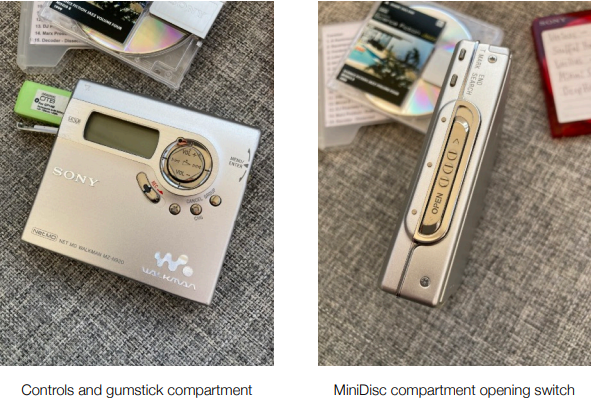
Internal view showing the precision engineering of the MZ-N920’s mechanism
The control layout represents years of user interface refinement. The jog dial, a signature feature of high-end Sony portables, provides intuitive navigation through menus and tracks. The tactile feedback is perfectly calibrated, offering distinct detents for precise control without being overly stiff.
Color options included silver and orange variants, with the orange version becoming particularly sought-after among collectors. The anodized finish has proven remarkably durable, with well-maintained units showing minimal wear even after two decades of use.
3.2 Technical Specifications
| Component | Specification | Notes |
|---|---|---|
| Audio Codec | ATRAC3/ATRAC3plus | 132kbps, 105kbps, 66kbps modes |
| Frequency Response | 20Hz – 20kHz | ±3dB (playback) |
| Signal-to-Noise Ratio | 98dB | A-weighted, playback |
| Total Harmonic Distortion | 0.035% | At 1kHz, playback |
| Output Power | 8mW + 8mW | Into 16Ω load |
| Battery Life | 56 hours | Playback with NH-14WM |
| USB Connectivity | USB 2.0 Full Speed | NetMD transfer |
The N920’s technical specifications represent the state-of-the-art for portable digital audio in 2003. The implementation of ATRAC3plus codec allowed for extended recording times while maintaining audio quality that satisfied even critical listeners.
3.3 Performance Analysis
Audio performance of the MZ-N920 consistently ranks among the best of any portable audio device from its era. The DAC implementation utilizes Sony’s advanced conversion technology, delivering clean, detailed sound with excellent dynamic range.
The headphone amplifier section deserves particular praise. Unlike many portable devices that struggle with higher-impedance headphones, the N920 can adequately drive headphones up to approximately 150 ohms with authority. The sound signature is notably neutral, with slight warmth in the midrange that enhances vocal reproduction without compromising instrumental detail.
Recording performance through the analog inputs exceeds expectations for a portable device. The built-in ADC handles complex musical passages without audible artifacts, and the automatic gain control system works effectively for most recording scenarios while remaining unobtrusive.
MZ-N920 Audio Performance Highlights:
- Exceptional dynamic range for portable device
- Clean, neutral sound signature
- Adequate power for most headphone types
- High-quality analog-to-digital conversion
- Low noise floor and minimal distortion
3.4 User Experience
The user interface of the MZ-N920 represents the culmination of Sony’s MiniDisc UI development. The combination of physical controls and on-screen menus strikes an excellent balance between functionality and ease of use.
The LCD display, while small by modern standards, provides clear information about track titles, recording levels, and system status. The backlighting system automatically adjusts based on ambient light conditions, ensuring readability without excessive battery drain.
NetMD functionality via USB connection was revolutionary for its time, allowing direct digital transfer from computer to MiniDisc. While the proprietary SonicStage software has compatibility challenges with modern operating systems, workarounds exist that maintain this functionality.
4. Best MiniDisc Players for 2025
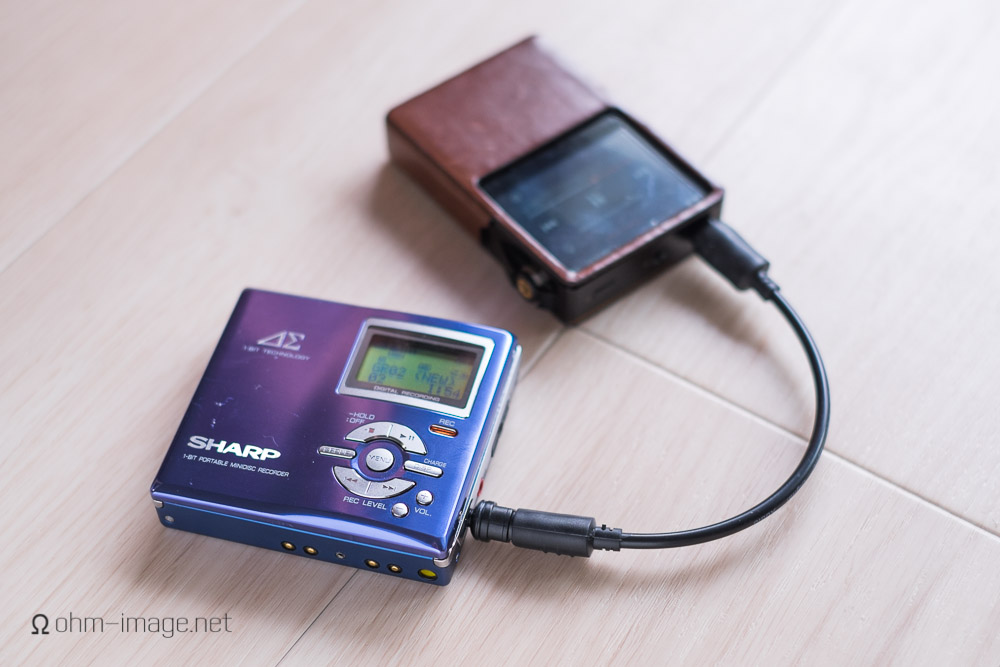
Comparison of different MiniDisc players showing the evolution of design and features
Selecting the ideal MiniDisc player for 2025 requires balancing availability, condition, features, and budget. The secondary market for MiniDisc equipment has stabilized, with certain models commanding premium prices due to their reputation and scarcity.
| Model | Type | Key Features | Typical Price Range | Recommendation Level |
|---|---|---|---|---|
| Sony MZ-N920 | Portable Recorder | NetMD, Premium build, Excellent audio | $300-500 | ★★★★★ |
| Sony MZ-N910 | Portable Recorder | NetMD, Good build quality | $200-350 | ★★★★☆ |
| Sony MZ-N707 | Portable Recorder | NetMD, Compact design | $150-250 | ★★★★☆ |
| Sony MZ-R55 | Portable Recorder | Analog recording, Rugged build | $100-200 | ★★★☆☆ |
| Sharp IM-DR580H | Portable Recorder | Hi-MD compatible, Unique design | $400-600 | ★★★★☆ |
For newcomers to MiniDisc, the Sony MZ-N707 represents an excellent entry point. It provides NetMD functionality, solid build quality, and reasonable pricing in the secondary market. The unit’s compact size makes it ideal for modern portable use, and parts availability remains adequate for maintenance.
Enthusiasts seeking the ultimate MiniDisc experience should prioritize the MZ-N920 despite its higher cost. The superior audio quality, build construction, and feature set justify the premium, and well-maintained examples retain their value effectively.
Budget-conscious buyers might consider older models like the MZ-R55, which still provide excellent analog recording capabilities and the essential MiniDisc experience. While lacking NetMD functionality, these units offer reliability and easier maintenance.
5. Blank MiniDisc Guide
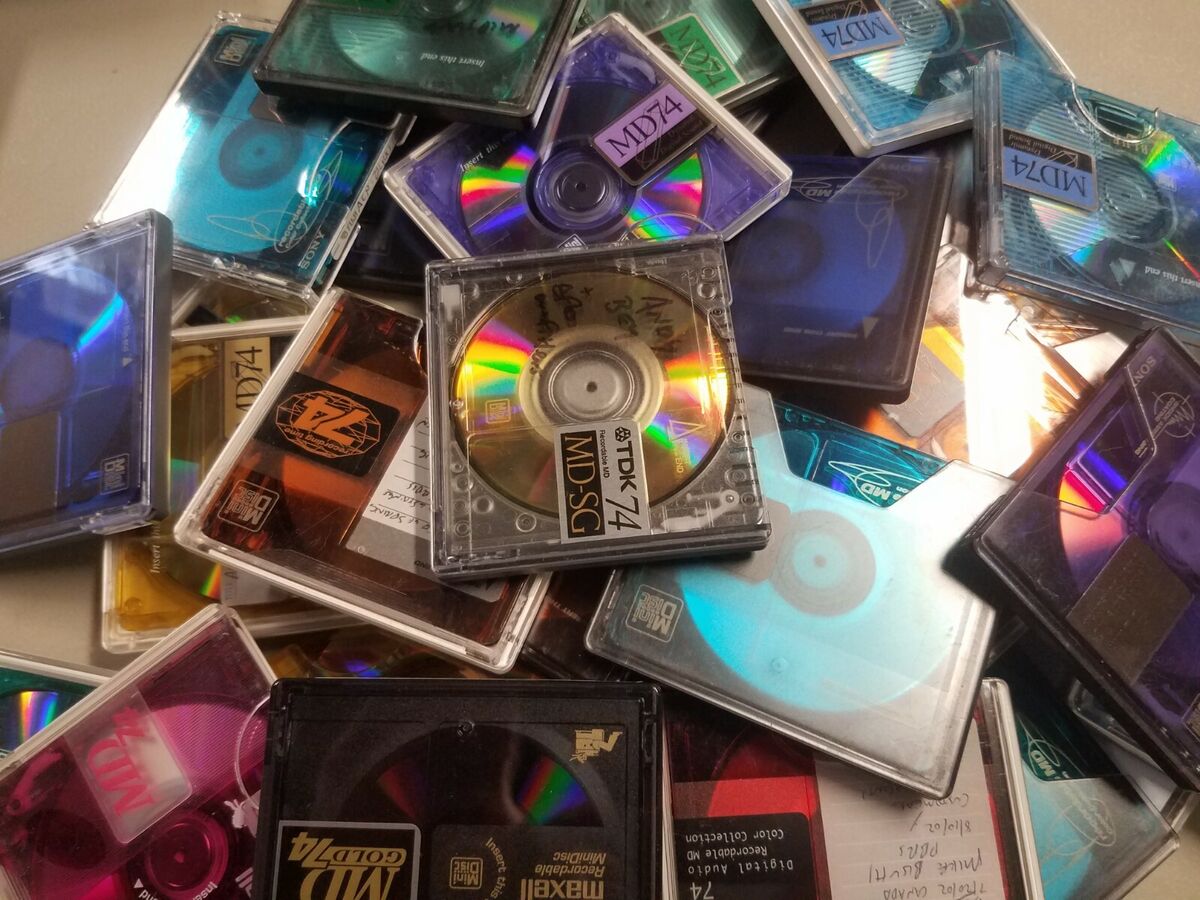
Selection of blank MiniDiscs from various manufacturers showing different capacities and designs
Blank MiniDiscs remain available through various channels, though selection and pricing vary significantly from the format’s heyday. Understanding the different types, manufacturers, and sources ensures optimal recording results and value.
5.1 Types of Blank Discs
MiniDiscs were manufactured in several capacity configurations, each optimized for different use cases. The standard 74-minute disc matches CD capacity, while 80-minute variants provide extended recording time at the cost of slightly reduced reliability margins.
The disc construction utilizes a magneto-optical substrate with protective magnetic layer. Quality variations between manufacturers primarily relate to the precision of the magnetic coating and the durability of the protective cartridge.
| Capacity | Recording Time | Typical Use Case | Availability |
|---|---|---|---|
| 74 minutes | 74 min (SP mode) | Standard albums, high quality | Common |
| 80 minutes | 80 min (SP mode) | Extended albums, compilations | Very Common |
| 1GB Hi-MD | 8+ hours (LP mode) | Extended recording, data storage | Rare |
5.2 Brand Comparison
Sony, TDK, and Maxell dominated blank MiniDisc production, with each manufacturer developing distinct characteristics in their media formulations. Sony’s discs generally offer the most consistent quality and compatibility, while TDK variants often provide superior longevity.

Sony Neige series blank MiniDiscs, representing premium blank media quality
Maxell discs frequently feature attractive label designs and competitive performance, making them popular among collectors. Lesser-known brands like Denon and JVC produced limited quantities with varying quality levels.
Sony Characteristics:
- Excellent compatibility across all players
- Consistent magnetic coating quality
- Durable cartridge construction
- Premium price point
TDK Characteristics:
- Superior long-term stability
- Attractive label designs
- Good value for money
- Wide availability
5.3 Where to Buy
The blank MiniDisc market in 2025 operates primarily through online marketplaces, specialty audio retailers, and direct imports from Japan. Pricing varies significantly based on condition, brand, and seller location.
eBay remains the largest source for blank media, offering both new old stock (NOS) and used discs. Japanese sellers often provide the best selection and pricing, though shipping costs and delivery times must be considered.
Specialty audio retailers occasionally stock MiniDisc media, particularly those focusing on vintage and discontinued formats. These sources typically charge premium prices but offer assured quality and customer service.
Buying Tips for Blank MiniDiscs:
- Verify seller reputation and return policies
- Check cartridge condition in listing photos
- Consider bulk purchases to reduce per-disc cost
- Factor shipping costs into total price calculations
- Prioritize sealed/new old stock when possible
6. Bluetooth Modification Hacks
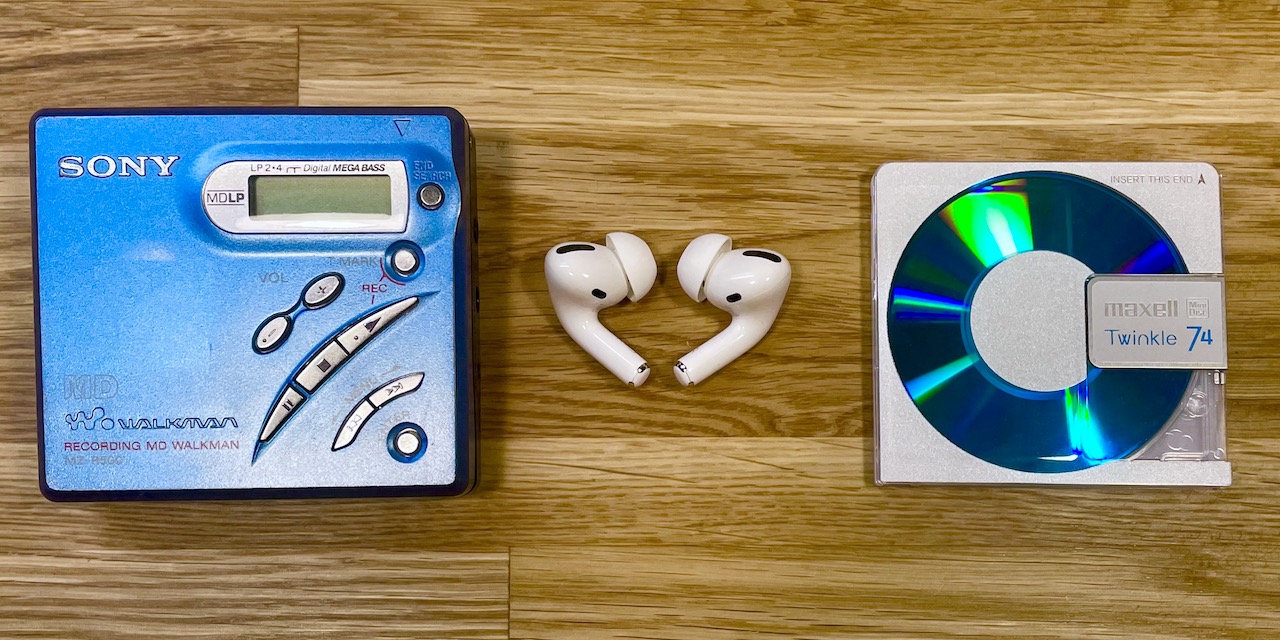
Bluetooth-modified MiniDisc player showing internal wireless components
The integration of Bluetooth connectivity with MiniDisc players represents one of the most exciting developments in the format’s revival. These modifications bridge the 20-year technology gap, enabling wireless headphone use while preserving the authentic MiniDisc experience.
Several approaches exist for adding Bluetooth functionality, ranging from simple external transmitters to sophisticated internal modifications. The choice depends on technical skill level, desired aesthetics, and performance requirements.
6.1 External Bluetooth Transmitters
The simplest Bluetooth solution utilizes small, battery-powered transmitters that connect to the MiniDisc player’s headphone output. These devices typically measure less than 30mm square and can be attached discretely to the player or carried separately.

Compact Bluetooth transmitter suitable for MiniDisc player modification
Modern Bluetooth transmitters support aptX and aptX Low Latency codecs, ensuring minimal audio delay and maintaining sound quality approaching the original analog output. Battery life typically ranges from 8-12 hours, adequate for most listening sessions.
| Model | Codec Support | Battery Life | Size (mm) | Price Range |
|---|---|---|---|---|
| Avantree TC417 | aptX LL, aptX, SBC | 12 hours | 32 × 32 × 8 | $35-45 |
| 1Mii B03 | aptX LL, aptX, SBC | 10 hours | 30 × 30 × 10 | $25-35 |
| FiiO BTR3K | LDAC, aptX, SBC | 11 hours | 28 × 28 × 9 | $70-80 |
6.2 Internal Bluetooth Modifications
Advanced users can integrate Bluetooth modules directly into the MiniDisc player chassis, creating a seamless wireless experience. This modification requires soldering skills and careful mechanical fitting but produces professional results.
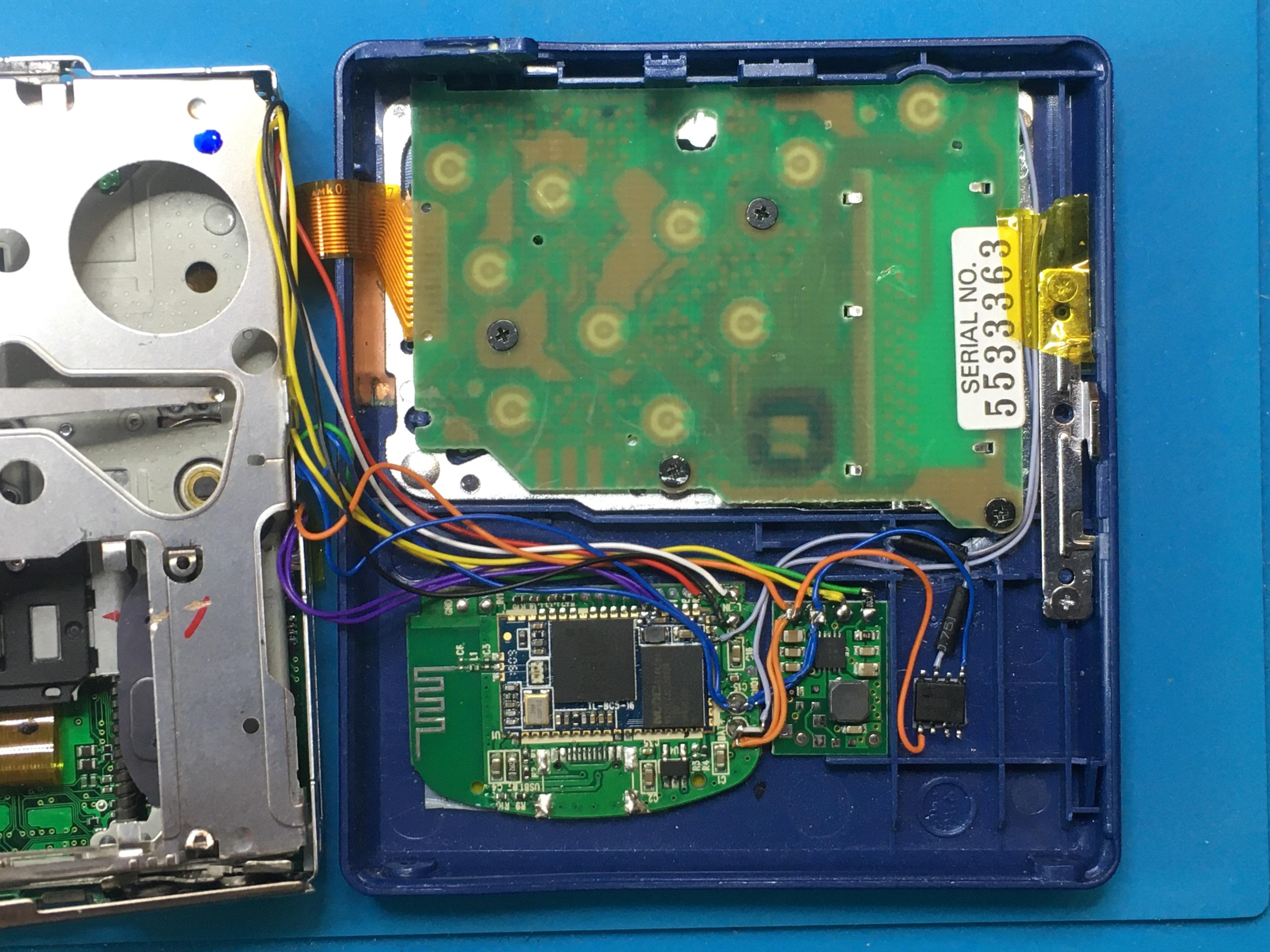
Internal view of a professionally modified MiniDisc player with integrated Bluetooth
The modification typically involves installing a small Bluetooth module that draws power from the player’s internal battery system. Connection points are usually found at the headphone amplifier output, before the volume control, to maintain level adjustment functionality.
Successful internal modifications require careful attention to electromagnetic interference, as the Bluetooth radio can potentially disrupt the sensitive analog circuits within the MiniDisc player. Proper shielding and component placement are essential for optimal results.
6.3 DIY Bluetooth Installation Guide
Installing an internal Bluetooth module requires advanced technical skills and should only be attempted by experienced electronics enthusiasts. The following overview describes the general process without specific technical details that could damage equipment if improperly implemented.
Required Tools and Materials:
- Precision screwdriver set
- Soldering iron (temperature controlled)
- Flux and rosin-core solder
- Multimeter for circuit testing
- Bluetooth module (CSR8645 or similar)
- Thin insulated wire (30-32 AWG)
- EMI shielding material
The modification process begins with complete disassembly of the MiniDisc player and identification of suitable connection points. The headphone amplifier output provides the ideal signal source, typically found as small surface-mount components on the main circuit board.
Power connections can usually be made to the battery supply rails, though voltage regulation may be required depending on the Bluetooth module specifications. Most modules operate at 3.3V, while MiniDisc players typically use 1.5V or 3V battery systems.
Mechanical mounting of the Bluetooth module requires careful planning to avoid interference with moving parts, particularly the disc mechanism and battery compartment. Some successful modifications utilize the space beneath the LCD display or within the battery compartment itself.
7. Setting Up Your MiniDisc System
Establishing a functional MiniDisc system in 2025 involves more than simply acquiring a player and media. Modern computer integration, software compatibility, and workflow optimization require careful planning and setup.
The foundation of any MiniDisc system is reliable software for transferring digital audio. While Sony’s original SonicStage software is no longer supported, several community-developed alternatives provide equivalent functionality with improved modern operating system compatibility.
7.1 Software Solutions
WebMiniDisc Pro represents the current state-of-the-art for NetMD functionality, providing browser-based transfer capabilities that work across Windows, macOS, and Linux systems. The software supports all major NetMD players and offers features that exceed the original Sony software.
| Software | Platform | Features | Cost |
|---|---|---|---|
| WebMiniDisc Pro | Web Browser | NetMD transfer, Title editing, Playlist management | Free |
| Platinum MD | Windows | Advanced transfer, Batch processing | Free |
| SonicStage (legacy) | Windows XP/Vista | Official Sony software | Free (discontinued) |
For analog recording workflows, any audio editing software capable of outputting to the computer’s audio interface can be used. Audacity provides an excellent free option with all necessary features for preparing content for analog transfer to MiniDisc.
7.2 Recording Optimization
Achieving optimal recording quality requires understanding both the technical limitations and strengths of the MiniDisc format. The ATRAC compression algorithm performs best with certain types of audio content and benefits from proper source material preparation.
Digital transfers via NetMD bypass the analog conversion stages entirely, providing the highest possible quality. However, the real-time nature of NetMD transfer means that source file quality directly affects the final result.
Recording Quality Tips:
- Use lossless source files when possible (FLAC, WAV)
- Normalize audio levels to maximize dynamic range
- Apply gentle EQ to compensate for ATRAC characteristics
- Avoid excessive compression or limiting in source material
- Use SP mode for critical listening applications
8. Maintenance and Care
Proper maintenance ensures reliable operation and extends the service life of MiniDisc equipment significantly. The format’s robustness compared to cassette tapes doesn’t eliminate the need for regular care and preventive maintenance.
The primary maintenance requirements focus on the mechanical components, particularly the disc loading mechanism and head assembly. These precision components are sensitive to dust, debris, and lubricant degradation over time.
8.1 Routine Cleaning Procedures
Regular cleaning prevents the accumulation of dust and debris that can cause playback issues or mechanical damage. The enclosed nature of MiniDisc cartridges provides some protection, but player mechanisms still require periodic attention.
Cleaning discs designed specifically for MiniDisc players provide the safest method for maintaining head cleanliness. These discs use soft brushes or fabrics that gently remove debris without risking damage to the delicate optical and magnetic components.
External cleaning should focus on control surfaces, display areas, and connection points. Isopropyl alcohol on a lint-free cloth effectively removes accumulated grime without damaging plastic surfaces or control labels.
8.2 Battery Maintenance
Battery maintenance represents a critical aspect of MiniDisc player care, particularly for rechargeable battery systems. Nickel-metal hydride batteries used in most players are susceptible to memory effects and capacity loss over time.
Modern replacement batteries often utilize lithium-ion chemistry, providing superior capacity and longevity compared to original cells. However, these replacements may require modified charging circuits or external chargers for optimal performance.
Well-maintained vintage MiniDisc player showing the results of proper care and storage
9. Community and Resources
The MiniDisc community represents one of the most knowledgeable and supportive groups in vintage audio. Forums, social media groups, and specialized websites provide invaluable resources for troubleshooting, parts sourcing, and technical knowledge sharing.
MiniDisc.org serves as the primary English-language hub for technical information, repair guides, and community discussion. The site maintains comprehensive databases of equipment specifications, compatibility information, and modification guides.
Reddit’s r/MiniDisc community provides an active forum for questions, collection sharing, and marketplace activities. The moderated environment ensures high-quality discussions and reliable information sharing.
9.1 Essential Resources
| Resource | Type | Focus Area | Language |
|---|---|---|---|
| MiniDisc.org | Website | Technical information, repairs | English |
| r/MiniDisc | Reddit Community | General discussion, marketplace | English |
| MiniDisc Wiki | Wiki | Equipment database | Multiple |
| Techmoan YouTube | Video Content | Reviews, demonstrations | English |
10. Future of MiniDisc
The MiniDisc revival shows no signs of slowing in 2025, with continued growth in community participation, equipment values, and technical innovation. While new hardware production remains unlikely, the enthusiast community continues developing solutions that extend the format’s viability.
Software development represents the most active area of innovation, with web-based tools like WebMiniDisc Pro providing capabilities that exceed original Sony software. These developments ensure continued compatibility with modern operating systems and improved user experiences.
The collectible market for rare equipment and media continues expanding, with certain models achieving significant price appreciation. This trend supports the continued availability of restoration services and replacement parts through specialized suppliers.
Looking Forward:
- Continued software development and improvement
- Growing collector market and equipment values
- Increased availability of modification services
- Preservation of technical knowledge and documentation
- Integration with modern audio technologies
The MiniDisc format’s unique combination of convenience, quality, and tactile experience ensures its continued relevance in an increasingly digital world. For those seeking an alternative to streaming’s ephemeral nature, MiniDisc provides a compelling return to physical media ownership and curation.
This comprehensive guide represents current best practices and knowledge for MiniDisc enthusiasts in 2025. As the community continues growing and evolving, these recommendations will undoubtedly expand and improve, ensuring the format’s continued vitality for future generations of audio enthusiasts.
Whether you’re rediscovering a childhood format or exploring MiniDisc for the first time, the journey offers unique rewards that modern digital formats simply cannot replicate. The combination of superior audio quality, physical ownership, and active community support makes MiniDisc an increasingly attractive option for discerning listeners.