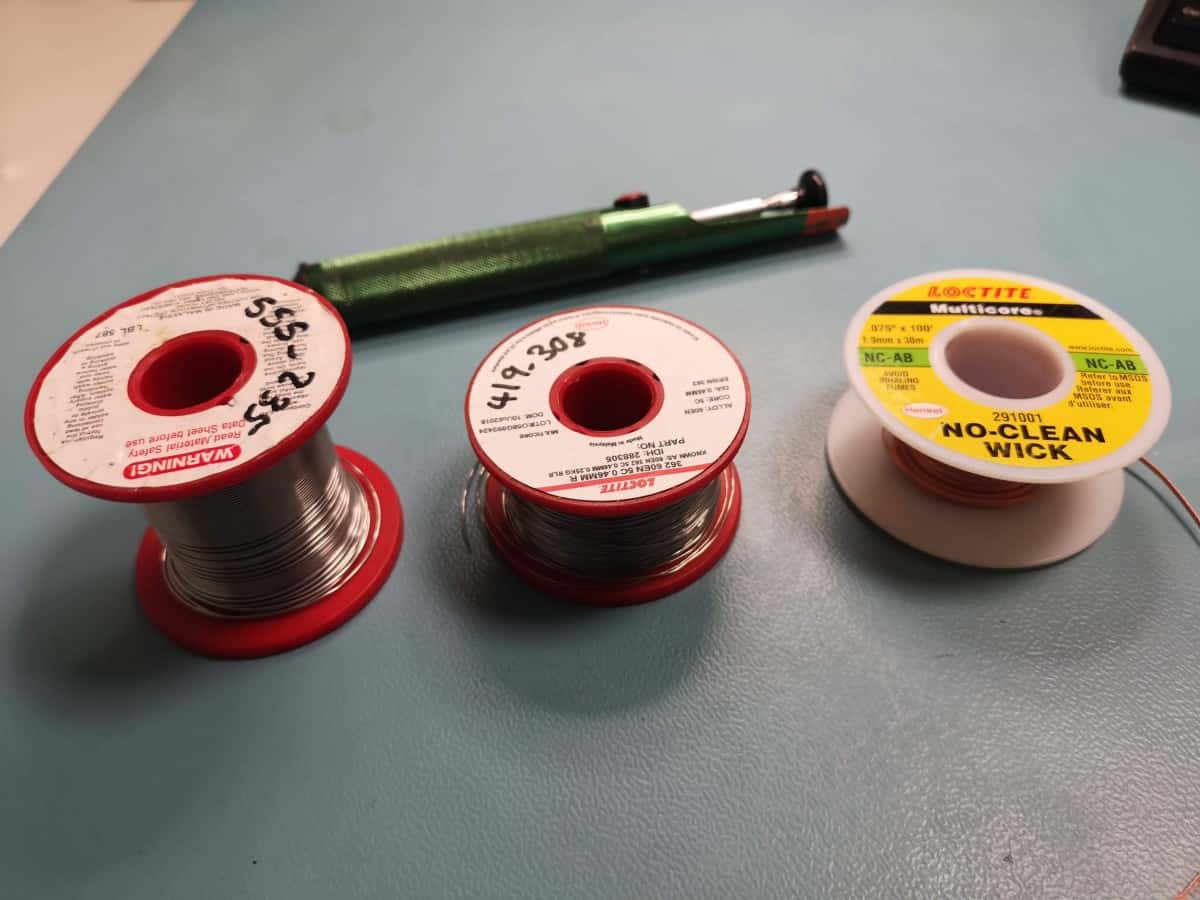
Choosing the right solder makes a bigger difference to repair work than most people expect. The wrong alloy or a poor flux core makes joints dull, slow to flow and harder to get right, especially on boards that are 30 or 40 years old. The right one makes the work quicker, neater and kinder to fragile pads.
This guide explains the main types of solder, which suits vintage electronics best, and what diameter to buy.
Leaded or lead-free?
Almost all electronics made before the mid-2000s were built with tin-lead solder. When you repair them, leaded solder is usually the easiest and most compatible choice.
| Alloy | Melting behaviour | Notes |
|---|---|---|
| Sn63/Pb37 (63/37) | Eutectic: melts at 183°C | Goes from solid to liquid at one temperature; the easiest to use |
| Sn60/Pb40 (60/40) | Melts over about 183–190°C | Very common and works well; slight pasty range |
| SAC305 (Sn96.5/Ag3/Cu0.5) | Melts at about 217–220°C | Common lead-free alloy; needs more heat |
Why 63/37 is a favourite
63/37 is a eutectic alloy, which means it melts and solidifies at a single temperature rather than passing through a pasty stage. Joints are less likely to be disturbed as they cool, which helps prevent dull, grainy “cold” joints. It also melts at a relatively low temperature, which is gentler on old boards.
When 60/40 makes sense
60/40 is cheaper and very widely available, and for most through-hole work the difference from 63/37 is small. If you already have good 60/40, there is no need to replace it.
Lead-free solder
Lead-free solders such as SAC305 are required in new commercial products in many regions, and some people prefer not to handle lead. They work, but they need a hotter iron, they wet less readily, and joints look duller even when they are good. On vintage boards, the extra heat increases the risk of lifting pads and tracks.
If you do use lead-free on an old board, remove as much of the original solder as possible first. Mixing leaded and lead-free alloys in the same joint can give unreliable results.
Flux core matters
Most electronics solder has flux in its core. Flux cleans the metal surfaces as the solder melts, so it can flow and bond properly.
- Rosin-based flux is traditional and works very well on old, oxidised parts. The residue can be cleaned off with isopropyl alcohol.
- No-clean flux leaves less residue and is designed to be left on the board, although many people still clean it for appearance.
- Water-soluble flux is very active but must be washed off thoroughly, so it is less suitable for hobby repairs.
- Never use acid-core plumbing solder on electronics. It corrodes the board.
On old joints, extra flux helps even with flux-cored solder. See our guide to the best flux for soldering and the round-up of top solder fluxes.
Which diameter?
- 0.5mm to 0.6mm: fine work, small through-hole joints and surface-mount parts.
- 0.7mm to 0.8mm: the best all-rounder for retro computer and console repair.
- 1.0mm and up: large joints, power connectors and wiring.
If you only buy one reel, choose around 0.7mm.
Recommended solder
Reputable brands such as Kester, MG Chemicals, Multicore (Loctite) and Chip Quik produce good-quality electronics solder. Avoid unbranded solder of unknown composition, which can contain impurities that flow badly.
Safety
- Wash your hands after handling leaded solder, and do not eat or drink at the bench.
- The fumes are mostly from the flux, not the metal. Use a fan or fume extractor to draw them away from your face.
- Keep solder away from children and pets, and dispose of scrap solder responsibly.
Getting good joints
Good solder is only half of the story. A temperature-controlled iron with a clean, tinned tip matters just as much. See our guides to the best soldering iron for retro electronics and how to tin a soldering iron. Heat the pad and the lead together, feed the solder into the joint rather than onto the tip, and remove the iron as soon as the solder has flowed around the joint.
FAQ
What is the best solder for vintage electronics?
For most repairs, 63/37 tin-lead solder with a rosin flux core, around 0.7mm in diameter. 60/40 also works well.
Can I use lead-free solder on old electronics?
Yes, but it needs more heat and does not wet as easily. Remove the original solder first, as mixing alloys can give poor joints.
What is the difference between 63/37 and 60/40 solder?
63/37 is eutectic, so it melts at a single temperature of 183°C. 60/40 has a short pasty range up to about 190°C. Both work well for electronics.
Is acid-core solder suitable for electronics?
No. Acid flux is for plumbing and corrodes circuit boards. Always use rosin, no-clean or electronics-grade flux.