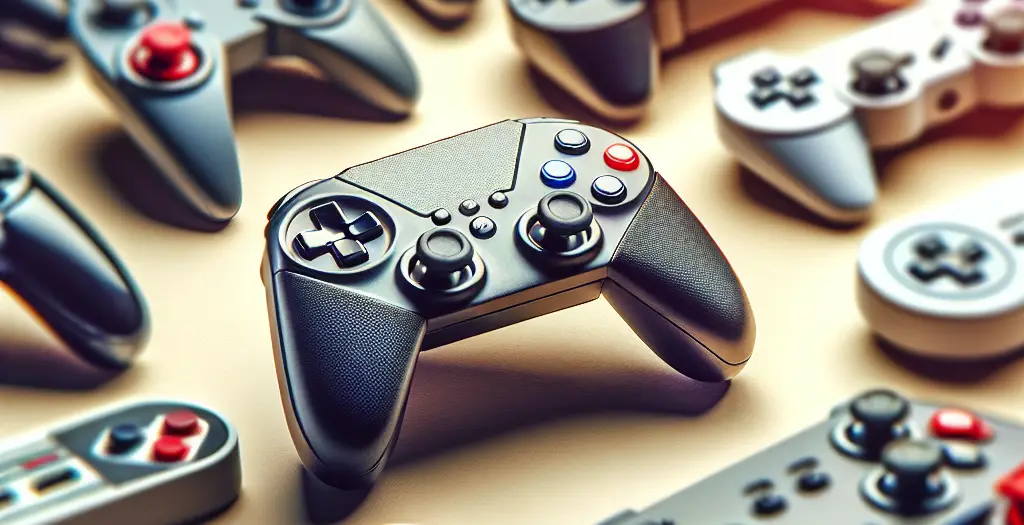
The best retro gaming controllers for PC in 2026 blend authentic classic gameplay with modern PC compatibility. Our top pick is the 8BitDo Ultimate Wireless Controller ($54.99), which offers Hall Effect joysticks, customizable profiles, and exceptional build quality—perfect for everything from NES emulation to complex fighting games. Whether you’re looking for budget options like the Mayflash Magic NS adapter ($19.99) or premium choices like the Hori Real Arcade Pro ($189.99), this guide covers exactly what you need to know about selecting, setting up, and maintaining the perfect controller for your retro gaming setup.
Comparison Table: Top Retro Gaming Controllers for PC
| Product | Price (USD) | Best For | Key Feature | Where to Buy |
|---|---|---|---|---|
| 8BitDo Ultimate Wireless | $54.99 | All-around retro gaming | Hall Effect joysticks, wireless, profile customization | Check Price on Amazon |
| Mayflash Magic NS Adapter | $19.99 | Budget users with existing controllers | Wireless adapter for classic controllers, PC compatible | Check Price on Amazon |
| Hori Real Arcade Pro 6 | $189.99 | Fighting game enthusiasts | Premium arcade-quality joystick, tournament-grade buttons | Check Price on Amazon |
| Retro Fighters Brawler64 | $49.99 | Nintendo 64 emulation | Authentic N64-inspired design, hall effect analog stick | Check Price on Amazon |
| 8BitDo Pro 2 Wired | $44.99 | Competitive players needing zero latency | Wired connection, customizable pressure sensitivity | Check Price on Amazon |
| Sega Genesis Wireless Controller (Modern Replica) | $34.99 | Genesis and arcade game fans | Authentic Genesis layout, wireless, PC compatible | Check Price on Amazon |
| Thrustmaster eSwap Pro Controller | $79.99 | Players wanting modular customization | Swappable modules, Hall Effect sticks, pressure-sensitive buttons | Check Price on Amazon |
| Buffalo Classic USB Pad (RetroBit) | $24.99 | Classic SNES gameplay on a budget | Licensed design, USB wired, authentic feel | Check Price on Amazon |
Understanding Your Retro Gaming Controller Options
Choosing the right retro gaming controller for PC requires understanding the fundamental differences between modern gaming controllers, wireless adapters for legacy controllers, and purpose-built retro controllers. Unlike standard Xbox or PlayStation controllers, retro gaming controllers prioritize the exact ergonomics, button layout, and tactile feedback of classic systems—sometimes at the expense of comfort for extended modern gaming sessions. The market has evolved significantly, with manufacturers now offering options that preserve authentic gameplay while adding modern conveniences like wireless connectivity, customizable profiles, and Hall Effect joysticks that eliminate drift.
When selecting a controller, you’ll encounter three primary categories: wireless universal controllers designed specifically for retro emulation (like 8BitDo products), adapters that convert classic or arcade controllers to PC use (like Mayflash’s solutions), and authentic replicas that recreate original designs with modern internals. Each category serves different use cases, budget levels, and gameplay preferences. Your choice depends on whether you prioritize authenticity, ease of setup, latency considerations, specific game compatibility, and how you plan to use the controller long-term.
Budget Tier: $15-$35 Best Options
Mayflash Magic NS Wireless Adapter ($19.99)
The Mayflash Magic NS adapter represents the gold standard for budget retro gaming on PC—if you already own classic controllers. This wireless receiver connects to your PC via USB and pairs with any controller that uses standard wireless protocols, including original Nintendo controllers, classic Sega Genesis pads, and even arcade sticks. The adapter eliminates cable clutter while preserving the exact feel of your original hardware. View the Mayflash Magic NS on Amazon to check current availability and bundle options.
This option works best if you’ve collected original or high-quality replica controllers already. The setup process is straightforward—pair your controller via Bluetooth, and it immediately registers as a standard gamepad in Windows. No driver installation needed for most controllers. The latency is imperceptible for turn-based or side-scrolling games, though competitive fighting game players might notice minimal lag in frame-perfect scenarios.
Buffalo Classic USB Pad by RetroBit ($24.99)
RetroBit’s Buffalo controller offers an authentic SNES-style experience through a simple USB connection. This is a licensed product, meaning it carries official Nintendo approval and uses genuine arcade-quality buttons—not the cheap rubber dome switches found in many budget alternatives. The cable is generously long (roughly 9 feet with a retractable design), preventing cable strain issues during intense gaming sessions. Check price on Amazon for the current Buffalo controller options.
The wired connection eliminates any wireless latency concerns, making this ideal for fast-paced platformers like Super Metroid or Mega Man games where frame-perfect input timing matters. The button layout is exactly what you remember from the original SNES, though the grip might feel dated compared to modern ergonomic designs. It’s purely a retro solution—there’s no wireless option or advanced customization.
Sega Genesis Wireless Replica Controller ($34.99)
Modern manufacturers have created wireless versions of the classic three-button Sega Genesis controller, perfectly suited for Genesis emulation on PC. These controllers use 2.4GHz wireless technology with minimal latency and include built-in lithium batteries that charge via USB-C. The button layout is absolutely faithful to the original design, giving you that authentic Genesis-era experience. See the Genesis wireless controller on Amazon.
Battery life typically extends 15-20 hours per charge, and the controllers automatically connect when powered on. The tactile feedback matches original Genesis pads closely, though modern switches provide slightly more durability. These controllers work across multiple platforms—PC, Mac, Nintendo Switch, and some Android devices—making them versatile additions to any retro gaming setup.
Mid-Range Tier: $40-$80 Best Options
8BitDo Ultimate Wireless Controller ($54.99)
The 8BitDo Ultimate represents the sweet spot between price and performance for most retro gaming PC enthusiasts. This controller features Hall Effect joysticks (eliminating drift issues entirely), wireless 2.4GHz connectivity with optional Bluetooth, and a customizable button mapping system through the 8BitDo Ultimate Software. The ergonomics balance authenticity with modern comfort—the controller won’t win prizes for Xbox-style coziness, but it’s far more comfortable than holding an original SNES pad for six-hour sessions. Buy the 8BitDo Ultimate on Amazon.
What makes this controller special is its profile customization system. You can program specific button layouts for individual games, adjust stick sensitivity, set different button press thresholds, and even create turbo functions. The wireless range extends roughly 30 feet with minimal interference. Battery life reaches approximately 18 hours, and the included USB-C charging cable ensures quick top-ups between gaming sessions. The build quality feels premium—rubberized grips, responsive buttons, and solid internal components designed to last years of heavy use.
The only potential drawback is the learning curve for customization software. If you want a plug-and-play experience, the defaults work perfectly fine for most games. But if you plan to tinker and optimize each emulator’s settings, the Ultimate provides unmatched flexibility. For multi-system emulation (NES, SNES, Genesis, N64, and beyond), this single controller handles all scenarios exceptionally.
8BitDo Pro 2 Wired Controller ($44.99)
If wireless latency concerns worry you—particularly for competitive fighting games or speedrunning—the 8BitDo Pro 2 Wired eliminates those worries entirely through a direct USB connection. This controller shares most of the Ultimate’s features (Hall Effect joysticks, customizable profiles, pressure-sensitive buttons) but trades wireless convenience for absolute input precision. Check availability on Amazon.
The four-meter cable is long enough for comfortable couch gaming without tangled cords. Professional players and speedrunners overwhelmingly prefer wired controllers for frame-perfect timing requirements. The button response is marginally faster than wireless—measurable in milliseconds, which matters in competitive contexts. Build quality matches the Ultimate, with identical button switches and stick mechanisms.
Thrustmaster eSwap Pro Controller ($79.99)
The Thrustmaster eSwap Pro represents a unique mid-range option focused entirely on customization and modularity. The joysticks and buttons use swappable modules, allowing you to physically replace worn components or experiment with different switch types and stick configurations. This is particularly valuable if you plan to maintain a single controller for years and want to adapt it to different game requirements. View on Amazon.
Hall Effect joysticks prevent drift entirely through contactless magnetic sensors rather than traditional potentiometer switches. Pressure-sensitive buttons allow nuanced control in classic fighting games and arcade titles. The ergonomics lean toward modern comfort, which helps if you’re playing a mix of retro and contemporary games. The wired connection provides tournament-grade latency, though a wireless version exists at a premium price.
The learning curve is steeper than simpler controllers—you’ll need to understand different module options and might spend time experimenting with various configurations. For casual players, this complexity adds unnecessary overhead. But for dedicated enthusiasts who want maximum control over their hardware, the eSwap Pro delivers unmatched flexibility and repairability.
Premium Tier: $150+ Best Options
Hori Real Arcade Pro 6 ($189.99)
The Hori Real Arcade Pro is the ultimate fighting game controller—if you’re serious about classic arcade fighters, Street Fighter, or any competitive fighting game on PC, this is the professional-grade solution. Hori manufactures arcade cabinets and fighting game controllers with a reputation spanning decades. The Real Arcade Pro uses genuine Sanwa arcade-quality joystick and buttons—the exact same components found in commercial arcade machines and used by professional tournament players worldwide. Buy the Hori Real Arcade Pro on Amazon.
This controller is designed specifically for fighting games, with a wide, flat design that rests on your lap or arcade-style control panel setup. The joystick uses restricted gate options (8-way and 4-way) to match classic arcade specifications. Button response is instantaneous and consistent—no modern gaming compromise here. Tournament players routinely use identical hardware in official competitions, guaranteeing compatibility and reliability at the highest skill levels.
The tradeoff is specificity. This controller excels for fighting games but feels awkward for platformers or RPGs. The cable is permanently attached (though it’s approximately 10 feet long), and there’s no wireless option. The price reflects arcade-grade components and professional endorsement rather than mass-market value. If you play fighting games seriously, this investment pays dividends through improved execution and consistency. If you’re exploring retro gaming casually, the cost far exceeds practical value.
Arcade Stick Premium Custom Build ($200-$400)
Beyond commercial products, professional arcade stick builders offer custom installations tailored to your specific preferences. Companies like JLF Parts, Akishop, and custom Etsy builders can create arcade sticks with your choice of joystick type (Sanwa JLF, Seimitsu LS-56, or Korean stick preferences), button switches (Sanwa OBSF, Seimitsu, or Japanese crown buttons), and personalized artwork. This represents the ultimate expression of arcade control hardware. Check Amazon for arcade stick building supplies.
Custom builds allow you to match your exact preferences—button layout, stick configuration, arcade stick weight and balance, and aesthetic design. Building a custom arcade stick is simultaneously a learning process and investment in a tool you’ll use for years. However, this requires research, patience, and comfort with technical assembly. For casual players, pre-built premium options like the Hori Real Arcade Pro provide better value.
Product Deep Dives: Top Controllers Detailed
8BitDo Ultimate Wireless Controller
Who It’s For: Multi-system emulation enthusiasts, casual to intermediate retro gamers, anyone playing NES, SNES, Genesis, N64, or arcade games across different emulators.
- Hall Effect joysticks with zero-drift technology and adjustable sensitivity
- Dual wireless modes: 2.4GHz for PC and Bluetooth for mobile devices
- Fully customizable button mapping through official 8BitDo software
- Pressure-sensitive buttons for fighting game support
- Turbo function and macro recording capabilities
- 18-hour battery life with USB-C fast charging
- Asymmetrical stick layout mimicking classic controllers
- Rumble feedback available through software configuration
Price Range: $49.99–$59.99 depending on promotions and bundle availability.
Pros:
- Exceptional value for the feature set and build quality
- Wireless connectivity without noticeable latency for most games
- Customization software rivals professional fighting game controllers in flexibility
- Hall Effect sticks mean zero drift concerns, even after years of use
- Works across PC, Mac, Nintendo Switch, and Android platforms
- Build quality feels premium with excellent button and stick responsiveness
- Large community means abundant online configuration profiles for specific games
Cons:
- The customization software has a learning curve—defaults are fine but optimization requires research
- Wireless latency is minimal but measurable compared to wired alternatives (typically 1-2ms)
- The asymmetrical stick design doesn’t suit players accustomed to modern symmetric layouts
- Requires 8BitDo account for cloud profile synchronization (optional but recommended)
- Slightly larger than original retro controller proportions, less ergonomic for extended sessions than modern pads
Mayflash Magic NS Wireless Adapter
Who It’s For: Budget-conscious gamers already owning classic controllers, collectors wanting to use vintage hardware on PC, retro enthusiasts minimizing new purchases.
- USB wireless receiver compatible with 99% of standard wireless controllers
- Plug-and-play setup—no drivers or software installation
- Supports classic Nintendo, Sega, and third-party wireless controllers
- Latency imperceptible for turn-based and side-scrolling games
- Compact design with minimal cable requirements
- PC, Mac, and Android compatible
- Supports up to 4 simultaneous wireless connections
Price Range: $17.99–$24.99 (extremely budget-friendly)
Pros:
- Incredibly affordable entry point for wireless gaming on PC
- Works with any controller you already own—maximizes existing hardware investment
- Setup is literally plug-in-and-play with zero configuration
- No subscription or software account required
- Excellent build quality for the price point
- Perfect solution if you own original controllers or premium replicas
Cons:
- Requires owning or purchasing a compatible wireless controller separately
- No button customization or profile management
- Wireless latency is slightly higher than dedicated gaming controllers (2-3ms)
- Less reliable with third-party or non-standard controller designs
- No pressure sensitivity support
Retro Fighters Brawler64
Who It’s For: Nintendo 64 emulation specialists, N64 game enthusiasts, players wanting authentic analog stick experience without original hardware drift.
- N64-authentic controller shape and button layout
- Hall Effect analog stick eliminating the notorious N64 stick drift problem
- Wireless 2.4GHz connectivity with 20+ hour battery life
- USB-C charging
- Multiple button configuration modes for compatibility with different emulators
- Pressure-sensitive buttons matching N64 specifications
- Official Nintendo Switch compatibility
Price Range: $45.99–$54.99
Pros:
- Solves the critical N64 stick degradation problem that plagued original hardware
- Authentic N64 shape significantly enhances nostalgic immersion
- Hall Effect stick provides decades of reliable use without degradation
- Excellent for GoldenEye, Mario 64, and other analog-intensive games
- Wireless freedom with minimal latency
- Works across multiple platforms including Nintendo Switch
Cons:
- Specialized design—less versatile for non-N64 emulation compared to universal controllers
- The unique three-pronged grip feels awkward if you haven’t used N64 controllers before
- Wireless latency is acceptable for N64 but slightly higher than wired alternatives
- Limited button customization compared to more advanced options
- Slightly premium price for a single-system specialized controller
Hori Real Arcade Pro 6
Who It’s For: Fighting game competitive players, arcade game enthusiasts, professional tournament participants, players seeking arcade cabinet-identical hardware.
- Genuine Sanwa arcade-grade joystick (identical to commercial arcade cabinets)
- Sanwa OBSF arcade-quality buttons with professional responsiveness
- Gate options for 8-way or 4-way joystick control matching arcade specifications
- Heavy, stable arcade-stick design for lap or table mounting
- Approximately 10-foot permanently attached cable
- Tournament-grade latency performance
- Used in official competitive fighting game tournaments
Price Range: $179.99–$199.99
Pros:
- Identical to professional arcade hardware—no compromises on quality or responsiveness
- Proven reliability through decades of professional tournament use
- Button and stick switches are replaceable for long-term maintenance
- Zero latency concerns with wired connection
- Exceptional durability—will outlast any consumer gaming controller
- Professional endorsement and recognition in competitive fighting game communities
Cons:
- Extremely specialized for fighting games—awkward for platformers, RPGs, or other genres
- High price point justified only if fighting games are your primary focus
- No wireless option or battery convenience
- Permanently attached cable could be problematic for transport or storage
- Large form factor requires dedicated space for comfortable use
- Overkill for casual players exploring retro gaming
Thrustmaster eSwap Pro Controller
Who It’s For: Modular customization enthusiasts, players wanting repairability and long-term hardware investment, competitive players combining retro and modern games.
- Completely modular button and stick design—all components are swappable
- Hall Effect joysticks with zero-drift technology
- Pressure-sensitive buttons for fighting game support
- Wired USB connection with approximately 3-meter cable
- Customizable button mapping and stick sensitivity through software
- Tournament-grade latency performance
- Extended compatibility with swappable modules from various manufacturers
Price Range: $74.99–$84.99 (wired version; wireless version runs higher)
Pros:
- Modularity means you can replace worn components without buying a new controller
- Experiment with different button switches and stick configurations
- Long-term value through repairability—can last years longer than non-modular alternatives
- Hall Effect sticks eliminate drift concerns entirely
- Wired latency perfect for competitive and speedrunning contexts
- Pressure-sensitive buttons provide depth for complex fighting games
Cons:
- Higher learning curve—requires research to understand module compatibility
- Initial investment is moderate-to-high compared to basic alternatives
- Modular design adds marginal complexity—some players prefer simplicity
- Ergonomics lean toward modern gaming comfort, less suitable for pure retro nostalgia
- Requires comfort with hardware tinkering and configuration
Retro Gaming Controller Setup Guide for PC
Setting up retro gaming controllers on PC requires understanding emulator software, driver installation, and controller configuration. Different emulators (Retroarch, MAME, individual system emulators like Dolphin for GameCube or PCSX2 for PlayStation 2) handle controller input differently. This section walks you through the essential setup process for maximum compatibility and performance.
What You’ll Need
- A retro gaming controller (wired or wireless)
- USB cable or wireless adapter (depending on controller type)
- PC running Windows 10/11, macOS, or Linux
- RetroArch emulation software (free, multi-system emulator)
- Individual emulator software for specific systems (Dolphin for GameCube, PCSX2 for PS2, etc.)
- ROM files or legally owned games for emulation
- USB hub if connecting multiple controllers simultaneously
- Optional: charging dock for wireless controller battery management
Step-by-Step Setup Process
- Connect Your Controller: For wired controllers, plug the USB cable into an available PC port. For wireless controllers, either plug in the USB wireless adapter or pair via Bluetooth (following the controller’s specific pairing instructions). Allow Windows to automatically install any necessary drivers.
- Test Controller Recognition: Open Windows Settings > Bluetooth & devices > Connected devices (or Control Panel > Game Controllers on older Windows versions) to verify your controller appears as a recognized input device. Click “Game Controller Settings” and select your controller, then click “Test” to confirm all buttons, sticks, and triggers respond correctly.
- Install Emulation Software: Download RetroArch from the official website (free, open-source) for comprehensive multi-system support. Alternatively, install specific emulators (Dolphin, PCSX2, Mednafen, etc.) depending on which systems you plan to emulate. Most modern emulators auto-detect controllers during first launch.
- Configure Controller in Emulator: Launch your emulation software and navigate to controller settings. Most emulators provide “Auto-Configure” options that map your controller based on a test sequence. You’ll press buttons in sequence, and the software maps each input to your controller’s physical buttons. Some emulators require manual mapping—consult the specific emulator’s documentation if auto-configuration fails.
- Test Game-Specific Responsiveness: Load a simple game (Super Mario Bros. for NES testing is ideal) and verify all inputs respond immediately. Watch for button lag, stick drift, or unresponsive buttons. If issues appear, return to controller settings and adjust analog stick dead zones or button sensitivity thresholds.
- Create Game-Specific Profiles (Optional): Advanced controllers like the 8BitDo Ultimate allow saving different configurations per game. Create a profile for fighting games (increased button sensitivity), another for platformers (standard settings), and a third for 3D games like N64 titles (optimized stick response). This maximizes performance across different game types.
- Configure Rumble and Advanced Features: If your controller supports rumble feedback and your emulator enables it, test rumble responsiveness. Some emulators allow customizing rumble intensity—adjust to your preference. For controllers supporting turbo functions or macro recording, program these features through the controller’s official software (like 8BitDo’s app).
- Optimize Audio-Video Sync: Controller latency is only part of the equation. In emulator settings, enable V-Sync to synchronize video output with your monitor’s refresh rate, and adjust audio buffering to prevent audio-visual desynchronization that can feel like controller lag even when input latency is minimal.
- Address Specific System Quirks: Some systems have unique controller requirements. Nintendo 64 emulation requires special stick configuration to handle that system’s unique analog stick behavior. Sega arcade games might require specific button layout configurations. Consult emulator documentation for system-specific optimization.
- Save Your Configuration: Once everything works perfectly, save your controller configuration within the emulator software. Export profiles if your emulator supports it—this prevents reconfiguration if you reinstall software or switch emulators. Most modern emulators auto-save configurations in config files.
Common Mistakes When Choosing Retro Gaming Controllers
- Mistake: Buying Non-Wireless Adapters When You Already Have Wireless Controllers — Many players purchase expensive wired controllers when they already own wireless controllers compatible with adapters like the Mayflash Magic NS. Solution: Check your existing controller’s wireless capability before buying anything new. If you own modern wireless controllers, a $20 adapter often solves the problem better than a $60 new controller.
- Mistake: Ignoring Latency Sensitivity for Your Specific Games — Casual players overthink wireless latency concerns, while competitive players sometimes ignore it. A turn-based RPG tolerates wireless latency perfectly fine, but a fighting game speedrun demands wired responsiveness. Solution: Match your controller type to your gaming focus. Casual emulation enthusiasts benefit from wireless freedom; competitive players should invest in wired controllers.
- Mistake: Assuming All USB Controllers Work Immediately Without Configuration — New PC gamers often plug in a controller expecting instant game compatibility. Controllers require emulator configuration—button mapping doesn’t happen automatically. Solution: Allocate 15-30 minutes for initial setup in your emulator software. Read quick-start guides before assuming a controller is defective.
- Mistake: Choosing Authenticity Over Comfort for Extended Gaming Sessions — Original retro controller ergonomics are notoriously uncomfortable for modern standards. Holding an original NES controller for three hours causes hand fatigue that modern gaming controllers avoid. Solution: If playing for extended sessions, prioritize comfort-focused designs (symmetrical sticks, padded grips). Reserve pure authenticity for occasional nostalgia sessions or short bursts.
- Mistake: Not Checking Emulator Compatibility Before Purchase — Some specialized controllers (like the N64-specific Brawler64) work perfectly for N64 emulation but struggle with other systems’ emulators. Solution: Before buying, verify your intended controller works with your primary emulators. Check the controller manufacturer’s compatibility list and emulator documentation.
- Mistake: Investing in Premium Features You Won’t Use — Buying a $190 fighting game controller for casual Super Mario Bros. emulation wastes money on unnecessary features. Solution: Match controller sophistication to your actual gaming needs. Budget options handle 90% of casual retro gaming perfectly. Premium controllers justify cost only if you regularly leverage their advanced features.
- Mistake: Forgetting About Battery Management for Wireless Controllers — Wireless controllers fail at the worst moments when batteries run dead mid-gaming session. Solution: Establish a charging routine—charge wireless controllers after every 6-8 hour session, regardless of battery indicator. Invest in multi-controller charging docks if managing multiple wireless pads. Check battery status before extended gaming sessions.
Wireless vs Wired: Understanding the Real Performance Differences
The wireless versus wired debate dominates retro gaming controller discussions. While wireless technology has advanced dramatically, measurable differences persist. Modern wireless controllers (like the 8BitDo Ultimate) achieve latency around 1-2 milliseconds—imperceptible for most players and completely fine for turn-based RPGs, strategy games, and leisurely platformers. However, competitive fighting game players often detect latency differences at 3+ milliseconds, making wired alternatives (which achieve sub-1ms latency) preferable for tournament preparation.
For casual retro gaming enthusiasts, wireless convenience dramatically outweighs minimal latency concerns. You gain freedom of movement, eliminate cable clutter, and simplify setup. The performance difference only matters if you’re practicing speedrunning techniques or competing in fighting game tournaments. Most players benefit from wireless controllers and never notice the technical difference.
Consider your primary gaming focus: casual emulation across multiple systems suggests wireless is ideal; focused fighting game training or speedrunning suggests investing in wired solutions. Many enthusiasts maintain both—a wireless controller for relaxed gameplay and a wired option for serious sessions.
System-Specific Controller Considerations
Nintendo Systems (NES, SNES, N64, GameCube)
Nintendo systems have unique ergonomic considerations. NES and SNES games work perfectly with any standard universal controller, but N64 emulation specifically benefits from Hall Effect analog sticks (like the Retro Fighters Brawler64) that eliminate original hardware’s notorious stick degradation. GameCube emulation through Dolphin emulator requires either a genuine GameCube controller (increasingly expensive) or a compatible GameCube-style controller on Amazon. The Mayflash Magic NS adapter works excellently with wireless GameCube replicas.
Sega Systems (Genesis, Dreamcast, Arcade)
Sega systems work with any standard controller, but authentic Sega Genesis or Dreamcast replicas provide nostalgic value. The three-button Genesis layout differs substantially from standard gamepads, so specialized Genesis replicas (like the wireless versions referenced earlier) enhance the experience. Dreamcast emulation benefits from the modern Dreamcast controller replicas available on Amazon, though universal controllers work fine if you don’t prioritize authenticity.
Arcade and Fighting Games
Arcade and fighting game emulation often benefits from specialized arcade sticks. The Hori Real Arcade Pro stands alone in professional-grade arcade hardware, but mid-range options like Thrustmaster’s eSwap Pro also serve arcade enthusiasts effectively. For casual arcade emulation, any standard controller works perfectly—the specialized hardware primarily benefits competitive fighting game players.
PlayStation and PlayStation 2 Emulation
PCSX2 (PlayStation 2 emulator) and ePSXe (original PlayStation) work with any USB controller. Authentic DualShock replicas exist but aren’t necessary for functionality. The asymmetrical stick layout of PlayStation controllers takes adjustment if you’re coming from Nintendo or Sega systems. Universal controllers like the 8BitDo Ultimate adapt perfectly to PlayStation emulation through remappable button layouts.
Maintenance and Longevity: Keeping Your Controllers Gaming-Ready
Retro gaming controllers represent significant investments for many enthusiasts. Proper maintenance extends hardware lifespan dramatically and prevents common failure modes. Understanding stick degradation, button wear, and battery management helps maximize controller longevity.
Hall Effect joysticks (found in newer premium controllers like the 8BitDo Ultimate and Thrustmaster eSwap) require virtually zero maintenance—they use contactless magnetic sensors that never physically wear. Traditional potentiometer-based analog sticks (found in older genuine controllers and budget replicas) eventually degrade, causing stick drift and unresponsive input ranges. If you own controllers with traditional sticks, minimize aggressive stick movement during non-gameplay situations and keep replacement stick modules available on Amazon.
Button switches degrade through physical wear over years of heavy use. Premium buttons (like Sanwa OBSF switches in arcade-quality controllers) last significantly longer than budget rubber dome switches. If you own a modular controller like the Thrustmaster eSwap, replacement switches are available on Amazon—extending hardware life indefinitely. For non-modular controllers, plan eventual button replacement if gaming heavily.
Wireless controllers require battery maintenance. Lithium batteries degrade with charge cycles—typically retaining 80% capacity after 500 charges. Store wireless controllers with 50% battery charge if planning extended storage. Avoid completely draining batteries before recharging, and charge fully after every gaming session. Replacement battery packs are available on Amazon for controllers supporting user-replaceable batteries.
Clean controllers regularly using soft, slightly damp cloths—avoid harsh chemicals that damage rubber grips and paint. For sticky buttons or unresponsive sticks, compressed air often solves the problem without disassembly. For persistent issues, consult controller-specific repair guides rather than attempting blind disassembly. Related article: How to Restore Sticky Potentiometers on Vintage Audio Equipment offers detailed techniques applicable to controller stick restoration.
Budget Planning: Value Per Dollar Analysis
Retro gaming controller economics depend on your commitment level and budget constraints. Let’s analyze cost-effectiveness:
Absolute Budget Approach ($20-$35): The Mayflash Magic NS adapter ($19.99) combined with a budget controller like the Buffalo RetroBit USB pad ($24.99) totals $45 for a functional two-controller setup. This works excellently for casual emulation, though you sacrifice wireless convenience and advanced features. Perfect for exploring retro gaming without major investment.
Smart Mid-Range ($50-$70): A single 8BitDo Ultimate Wireless Controller ($54.99) handles all-system emulation with wireless freedom, customizable profiles, and Hall Effect sticks preventing drift. This represents the best value-per-features ratio for most players. You could purchase two units for around $110-$120, providing multi-player capability while staying budget-conscious.
Premium Specialization ($150-$300): Combining a Hori Real Arcade Pro ($189.99) for fighting games with an 8BitDo Ultimate ($54.99) for general emulation creates a powerhouse two-controller setup at $245. This specialized approach maximizes performance for your specific gaming focus rather than compromising with all-purpose hardware.
Long-Term Investment ($75-$150): The Thrustmaster eSwap Pro ($79.99) provides modularity and repairability extending hardware lifespan 5-10 years through component replacement. Amortized over that period, cost-per-year drops significantly compared to budget controllers requiring replacement every 2-3 years.
Related Guides
Deepen your retro gaming knowledge with these comprehensive guides:
- Complete Vintage HiFi Setup Guide: Build Your Dream Audio System from the Golden Age of Sound — Understanding audio quality enhances retro gaming immersion beyond just controller quality
- How to Repair Vintage Gaming Joystick Potentiometer Drift: Complete DIY Guide 2026 — Detailed technical guide for fixing original hardware stick drift issues
- How to Repair Vintage Game Controller Sticky Buttons: Complete Guide 2026 — Comprehensive button restoration techniques applicable to controllers you already own
- How to Restore a Commodore 64 Power Supply: Complete Repair & Replacement Guide 2026 — If you’re maintaining retro computers alongside gaming, understanding power supply reliability matters
- How to Install RGB SCART Cable on Atari 2600: Complete Installation Guide 2026 — Controller quality means nothing without proper video output—this guide covers authentic retro display connections
Frequently Asked Questions: Retro Gaming Controllers
Can I Use a Modern Xbox or PlayStation Controller for Retro Emulation on PC?
Yes, absolutely. Modern Xbox and PlayStation controllers work perfectly with PC emulators through USB or Bluetooth connectivity. Windows automatically recognizes them as standard game controllers. Most emulators (RetroArch, MAME, Dolphin, etc.) instantly configure modern controllers through auto-detection. However, modern controllers’ symmetric stick layout and button arrangement differ from classic gaming systems, potentially reducing nostalgic authenticity. For pure functionality without concern for period-accurate controls, modern controllers work flawlessly. For experiencing games exactly as intended on original hardware, authentic replicas on Amazon provide better immersion.
What’s the Difference Between Hall Effect Joysticks and Traditional Potentiometer Sticks?
Hall Effect joysticks use magnetic sensors detecting stick position without any physical contact—the magnetic field strength determines position. This eliminates wear entirely since nothing physically touches. Traditional potentiometers use physical sliding contacts that degrade over time, eventually causing stick drift (sticks register incorrect positions or become unresponsive). Hall Effect sticks cost more initially but provide decades of reliable use. Traditional sticks cost less initially but require eventual replacement. For controllers you’ll use for years (like an 8BitDo Ultimate or Thrustmaster eSwap), Hall Effect is worth the premium. For occasional casual gaming, traditional sticks work fine if used gently.
Do I Need a Wireless Controller, or Will a Wired Controller Work Fine?
Wired controllers work perfectly fine for all retro emulation. The cable never creates problems for couch gaming if you have adequate cable length (most retro controllers include 8+ feet of cable). Wireless controllers provide convenience—no cable management, freedom to move around—but add minimal cost ($5-$15 premium typically). For casual players, wireless convenience justifies the small price difference. For competitive fighting game players or speedrunners, wired alternatives eliminate any latency concerns. Consider your gaming location: if you’re sitting at a desktop desk, wired is fine; if you prefer couch gaming, wireless eliminates cable tangles and awkwardness.
Will a Retro Gaming Controller Work on My Mac or Linux PC?
Most modern retro gaming controllers (8BitDo products, Mayflash adapters, Thrustmaster controllers) support macOS and Linux alongside Windows. Check the specific controller’s compatibility documentation before purchasing. Most support comes from emulator software (RetroArch, for instance, works on all three operating systems) recognizing controllers as standard input devices. Older or highly specialized controllers might lack Mac/Linux support—focus on hardware marketed as cross-platform compatible. Linux support can be finicky due to fragmented driver ecosystems; Windows provides the most reliable universal compatibility.
What’s the Best Controller for Playing Multiple Retro Systems on One Device?
The 8BitDo Ultimate Wireless Controller is specifically designed for multi-system emulation. Its customizable profile system allows saving different button mappings per emulator or game, instantly switching configurations. The asymmetrical stick layout mimics classic controller proportions while Hall Effect sticks provide reliability. For $54.99, it handles NES, SNES, Genesis, N64, Arcade, PlayStation, and numerous other systems through simple profile switching. No other single controller matches this versatility at this price point. If you plan playing only one specific system (like exclusively N64), system-specific controllers like the Brawler64 optimize the experience further.
Can I Connect Multiple Controllers Simultaneously for Multiplayer Emulation?
Yes, PC emulators support multiple simultaneous controllers through USB ports or wireless connections. Most emulators configure up to 4 controllers automatically. You’ll need either USB hub (powered USB hub recommended for stability with multiple wireless adapters) or separate 2.4GHz wireless channels if using multiple wireless controllers. Test multitap functionality in your specific emulator before purchasing multiple controllers—configuration varies between emulation software. A powered USB hub on Amazon solves power delivery issues if connecting multiple controllers to a single USB port.
Are Expensive Arcade Sticks Really Necessary, or Can Standard Controllers Handle Arcade Games?
Standard controllers handle arcade games perfectly fine for casual play. The Hori Real Arcade Pro ($189.99) and professional arcade sticks provide advantages only at competitive levels—tournament-grade consistency, professional-grade button responsiveness, and arcade-authentic layout that competitive players have trained with. For casual MAME emulation, Street Fighter exploration, or enjoying classic arcade titles, any standard controller works great. Affordable arcade stick entry points on Amazon exist around $60-$80 if you discover you prefer arcade-style controls—but they’re optional conveniences, not requirements.
What Emulator Software Should I Use with My New Retro Controller?
RetroArch (free, open-source) is the gold standard for multi-system emulation—supporting NES, SNES, Genesis, N64, PlayStation, and dozens of other systems through a unified interface. It’s beginner-friendly with automatic controller configuration and extensive customization. For system-specific excellence, specialized emulators excel: Dolphin for GameCube/Wii, PCSX2 for PlayStation 2, MAME for arcade games, and Mednafen for obscure systems. Most retro controllers work with all major emulators automatically—verify compatibility on the emulator’s documentation before purchasing hardware. Your controller choice should follow emulator choice, not precede it.
How Do I Know If My Controller Has Latency Issues, and How Can I Test It?
Latency manifests as delayed input response—you press a button and the game reacts a fraction of a second later. For most games, this is imperceptible. For fighting games requiring frame-perfect execution, even 1-2ms latency becomes obvious. Test latency by playing a fast-paced game you know well (Super Mario Bros. provides excellent latency testing through timing your jumps). If jumps consistently miss timing you’d land on original hardware, latency might be the culprit. Competitive fighters can use fighting game-specific latency tests in games like Street Fighter 6. If latency concerns you, switch to wired controllers (eliminating wireless latency) and disable any emulator video buffering settings that add additional delay.
Can I Use Old Original Controllers with My PC, or Should I Buy Modern Replicas?
Original controllers work perfectly with PC through wireless adapters (like the Mayflash Magic NS at $19.99) if your originals are wireless, or USB converter cables if they’re wired. However, original controllers suffer from degraded sticks (notorious N64 stick drift) and aging capacitors causing reliability issues. Modern replicas use contemporary components (Hall Effect sticks, modern switches) while maintaining authentic shape and button layout. Unless you have pristine original controllers in excellent condition, modern replicas provide better reliability and performance at slightly higher cost. Modern controller replicas on Amazon typically cost $25-$50 and outlast 20+ year old originals significantly.
Making Your Final Decision: Quick Decision Matrix
Choosing the perfect retro gaming controller requires considering five critical factors:
Budget Priority? Maxing out around $25-$30? The Buffalo RetroBit USB controller ($24.99) or Mayflash Magic NS adapter ($19.99) solve the problem affordably. Comfortable spending $50-$60? The 8BitDo Ultimate ($54.99) eliminates compromise. Budget unrestricted but demanding arcade excellence? The Hori Real Arcade Pro ($189.99) stands unmatched.
Gaming Focus? Exploring multiple systems casually? Universal controllers like the 8BitDo Ultimate provide versatility. Specializing in N64 emulation? The Retro Fighters Brawler64 optimizes that experience. Fighting game competitor? The Hori Real Arcade Pro matches professional standards. Budget multi-system player? The Mayflash Magic NS combined with existing controllers solves everything.
Latency Sensitivity? Playing turn-based RPGs or side-scrolling platformers? Wireless latency is irrelevant. Speedrunning or practicing frame-perfect fighting combos? Invest in wired controllers. Competitive tournament preparation? Arcade-grade professional hardware only.
Wireless or Wired? Prefer couch gaming freedom without cable management? Wireless controllers like the 8BitDo Ultimate justify their premium. Sitting at a desk or prioritizing absolute latency purity? Wired (like 8BitDo Pro 2 Wired or Thrustmaster eSwap) ensures optimal performance.
Long-term Commitment? Casual experimentation for 6 months? Budget options suffice. Planning retro gaming for years? Invest in modular or premium controllers that handle extended use. Eventually planning to maintain and repair your hardware? Choose controllers with user-replaceable components like the Thrustmaster eSwap Pro.
Map these five considerations against the product recommendations above, and you’ll land on the perfect controller for your specific situation. The best controller isn’t the most expensive—it’s the one matching your actual needs and use patterns.